
ODM Crochet Kit Development | Production-Ready Kit Systems
Turn your concept into a scalable, retail-ready DIY crochet kit system with clearer specs, more consistent user results, and compliance-ready documentation support.
When ODM Development Is the Right Choice
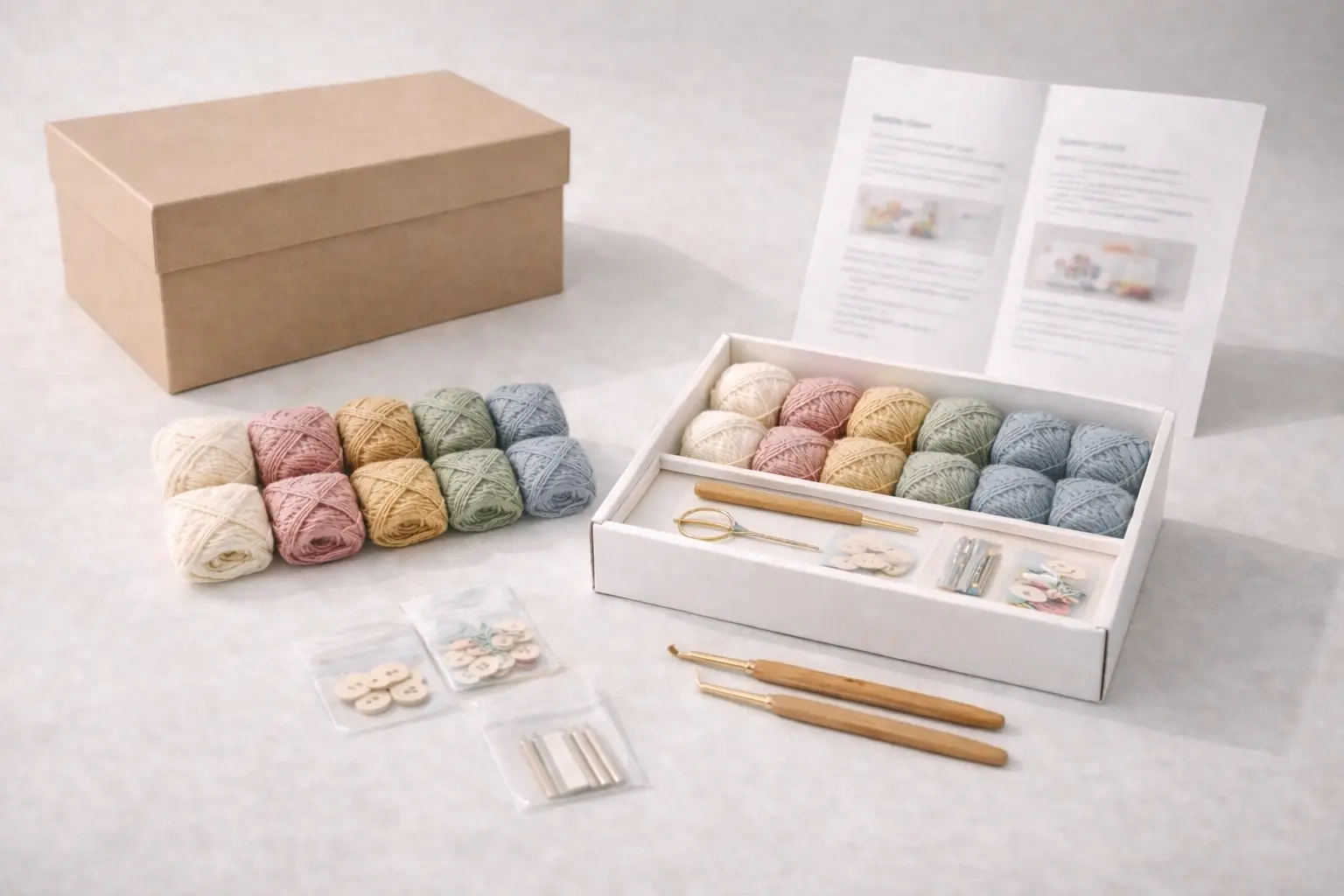
ODM is usually the better path when you are not simply buying an existing kit, but need a more controlled development process covering product logic, instruction quality, packaging fit, and production readiness.
This is especially useful for buyers launching new crochet kit lines, refining customer experience, or building multi-SKU programs that need stronger consistency from sample stage to mass production.
Best for
New kit concepts, private label programs, upgraded retail lines, instructional redesign, and packaging-driven repositioning.
Not just sampling
ODM is not only about making a sample. It is about making the concept executable, repeatable, and production-safe.
Main benefit
Better development control across materials, instructions, assembly flow, packaging, and final quality expectations.
Typical output
A clearer development pack with BOM, pattern, instruction structure, QC logic, and a roadmap for production sign-off.
What You Receive in an ODM Development Pack
Clear deliverables reduce iteration cycles, prevent production drift, and improve end-user success.
Material Library for Faster Development
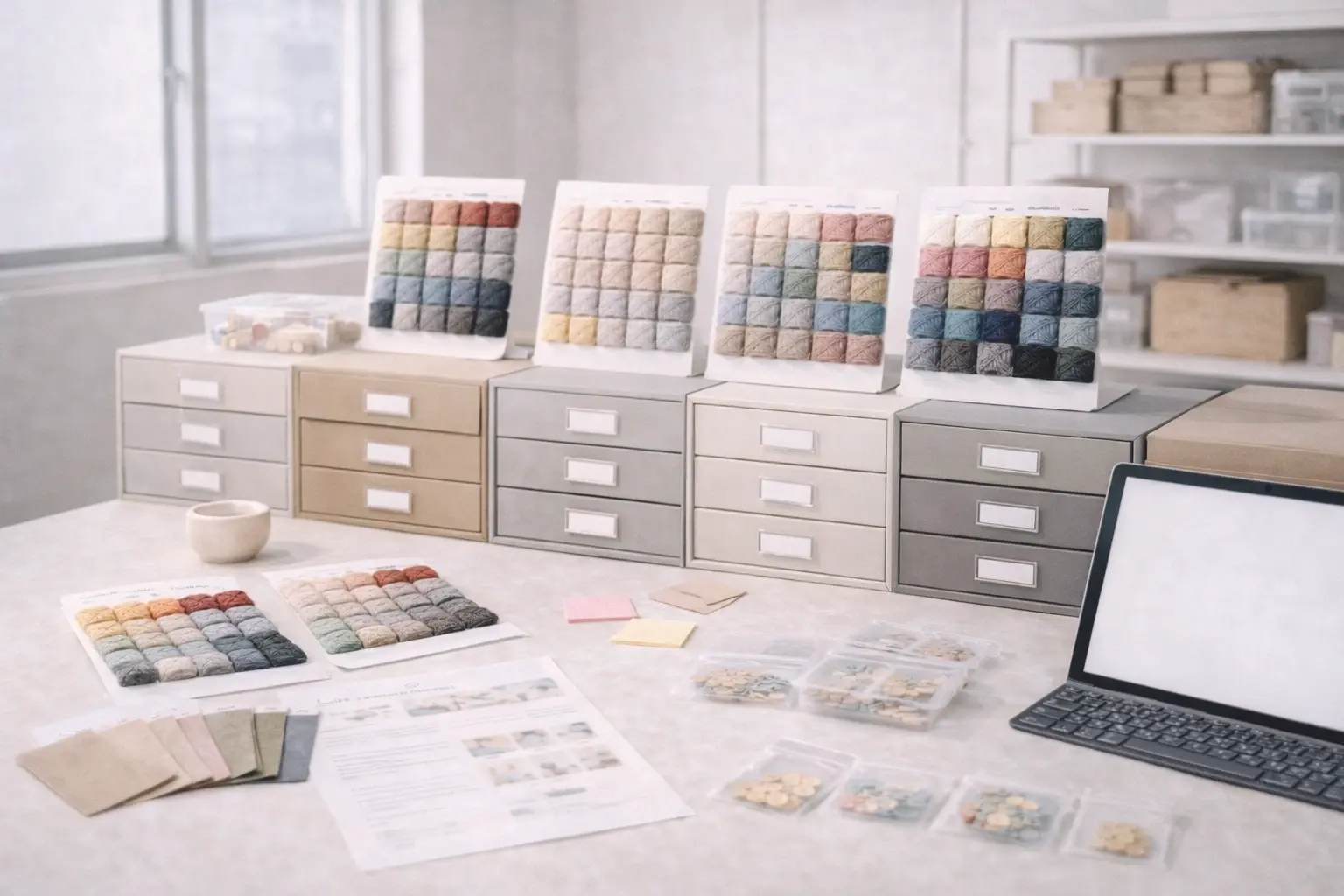
A structured yarn and accessory library helps speed up BOM selection, improve consistency across SKUs, and reduce avoidable sample revisions.
BOM & Component Specs
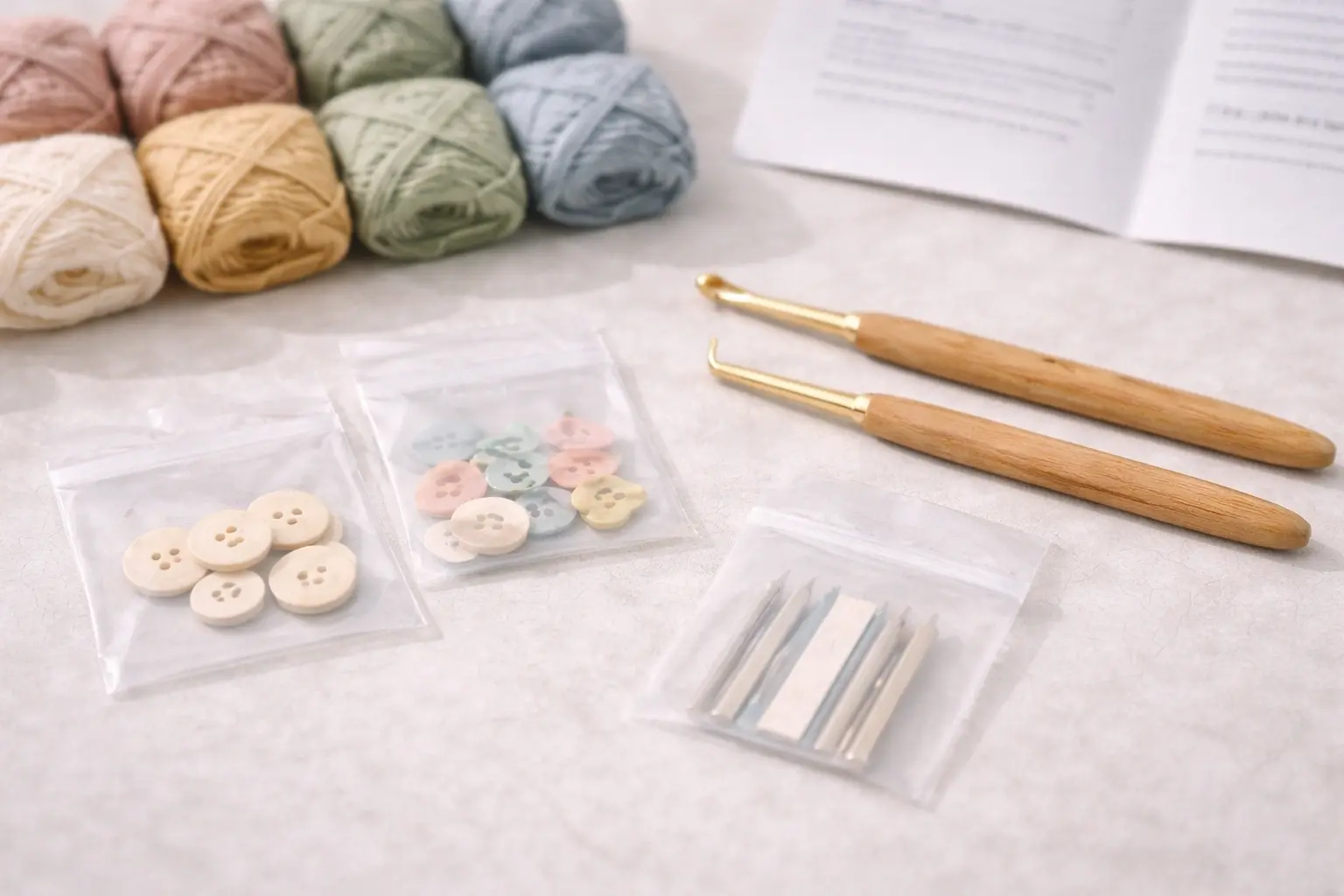
Yarn spec, hook size, accessories, packaging materials, and substitution rules defined early for better control.
Output: BOM + spec sheet + approved alternatives.
Pattern System
Production-feasible pattern drafting with difficulty calibration and stitch counts aligned to materials.
Output: finalized pattern + grading notes if needed.
Instruction Design
Step-by-step layout, beginner-friendly structure, photo or diagram placement, and QR or video integration options.
Output: print-ready instruction draft + revision notes.
Packaging & Retail Readiness
Packaging format suggestions, label areas, barcode placement, inserts, and shelf-display considerations.
Output: packaging checklist + dieline-ready notes.
Assembly SOP & QC Checkpoints
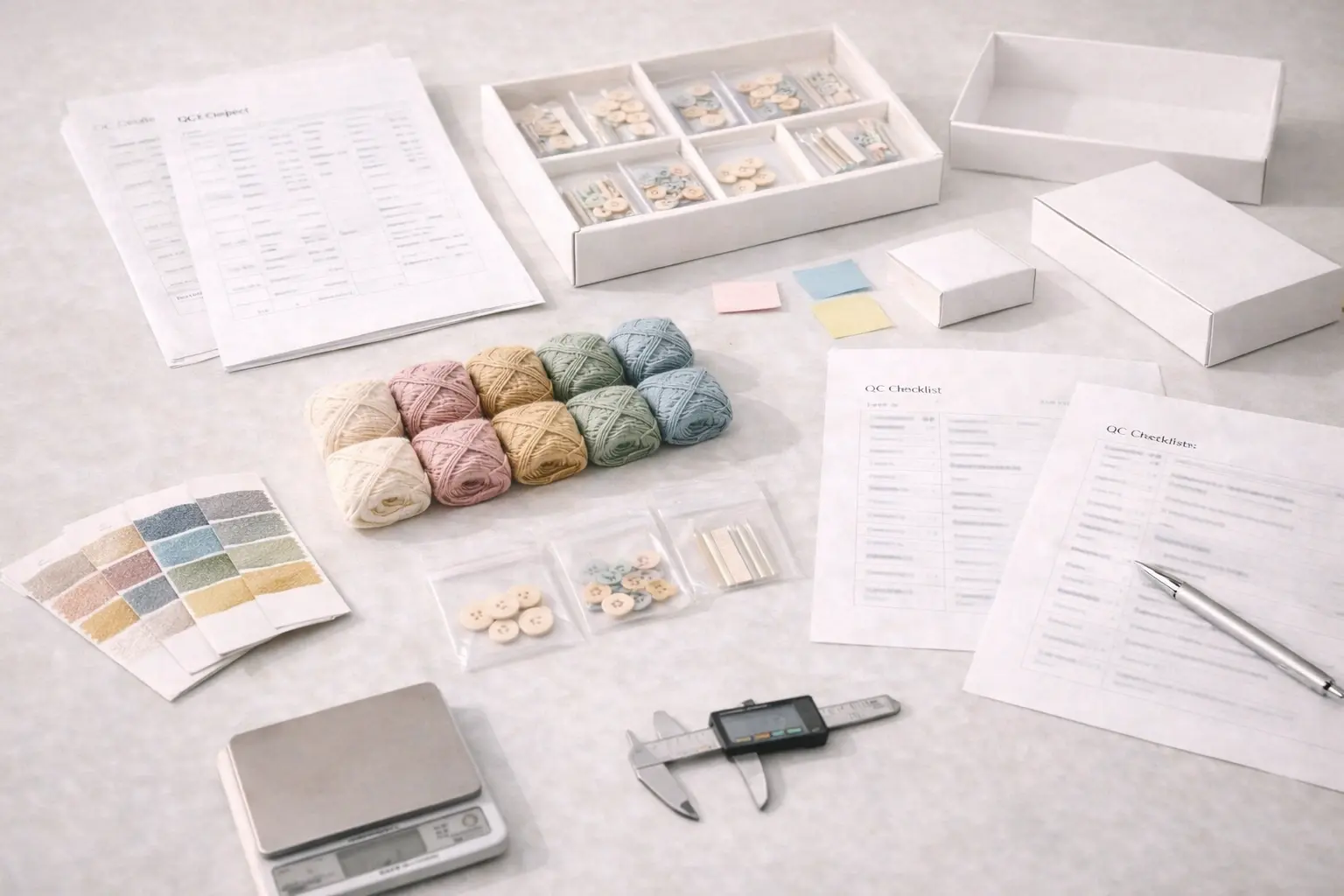
Standardized assembly steps, component verification, in-process checks, and final inspection criteria.
Output: SOP + QC checklist.
Compliance-ready Support
Material declarations, labeling guidance, and documentation planning aligned to target markets as required.
Output: documentation checklist + test planning notes.
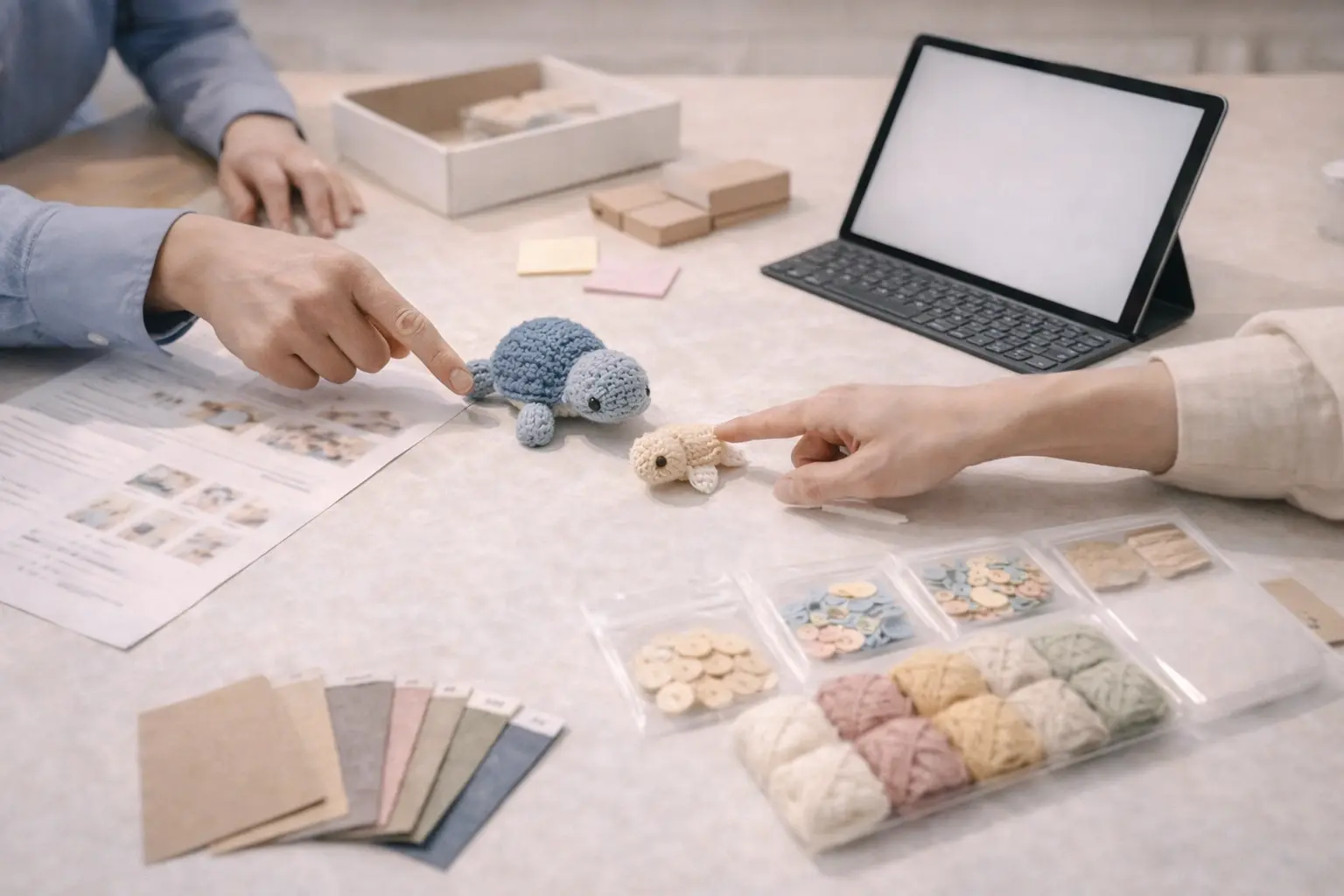
Collaborative Development, Structured Decisions
When alignment is needed across design, packaging, and retail requirements, a visual collaboration workflow helps shorten decision cycles and reduce misunderstandings before sampling starts.
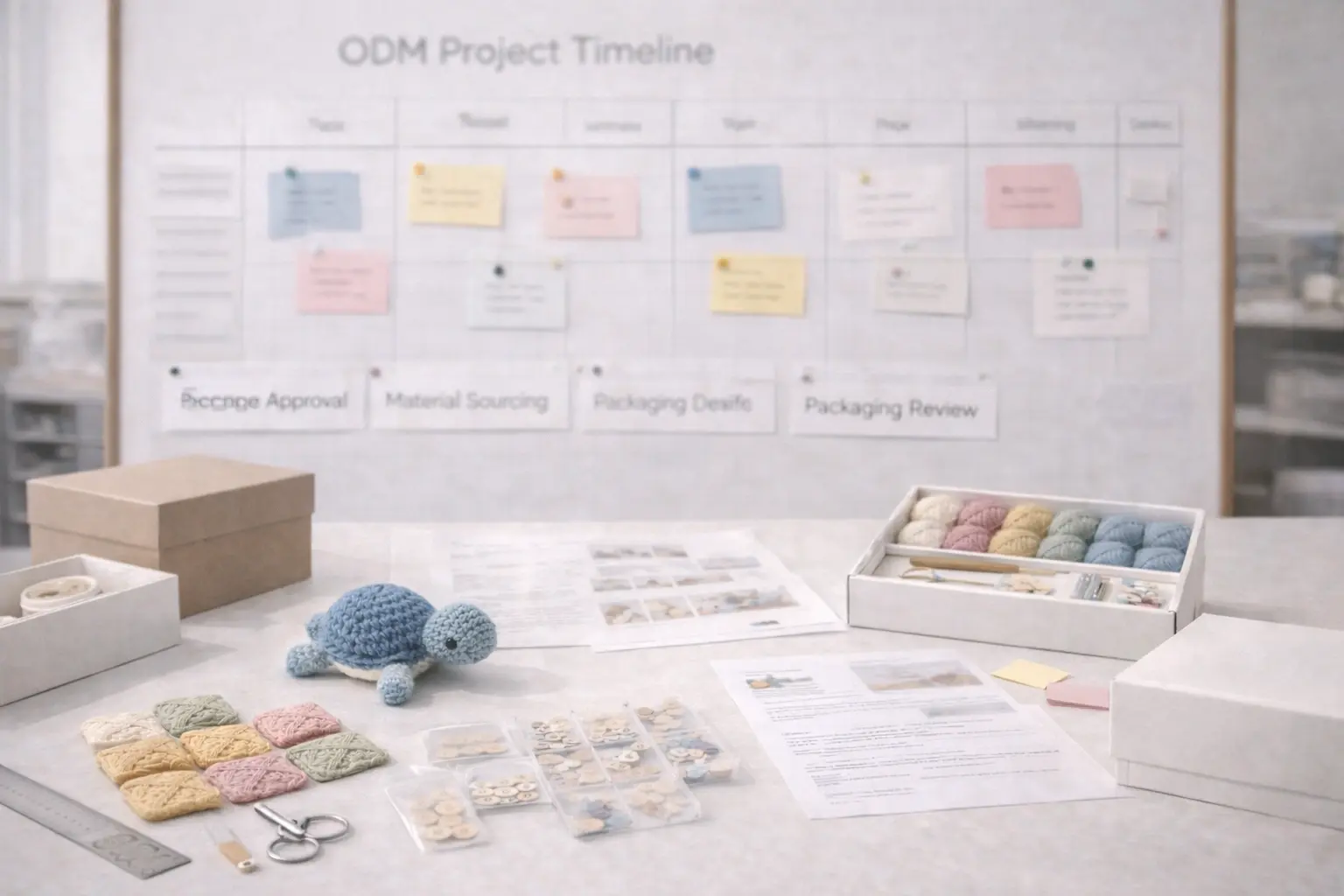
Concept to Production Journey
A gated process with clear deliverables. Each phase ends with sign-off to reduce scope drift, production drift, and avoidable rework.
Concept & Feasibility
Gate 1: Brief FreezeAlign on target user, difficulty, price band, and retail positioning before sampling starts.
Pattern, Materials & Instruction Draft
Gate 2: Spec FreezeDraft pattern system, select materials, and build instruction structure optimized for user success and production control.
Sampling & Validation
Gate 3: Sample Sign-offRun rapid iteration cycles to validate pattern clarity, component completeness, and packaging feasibility before production setup.
Production Setup & Launch
Gate 4: PP / Pre-ProductionFinalize SOP, QC checkpoints, packaging flow, and documentation pack for stable production rollout.
Timelines vary by packaging complexity, testing requirements, and approval cycles.
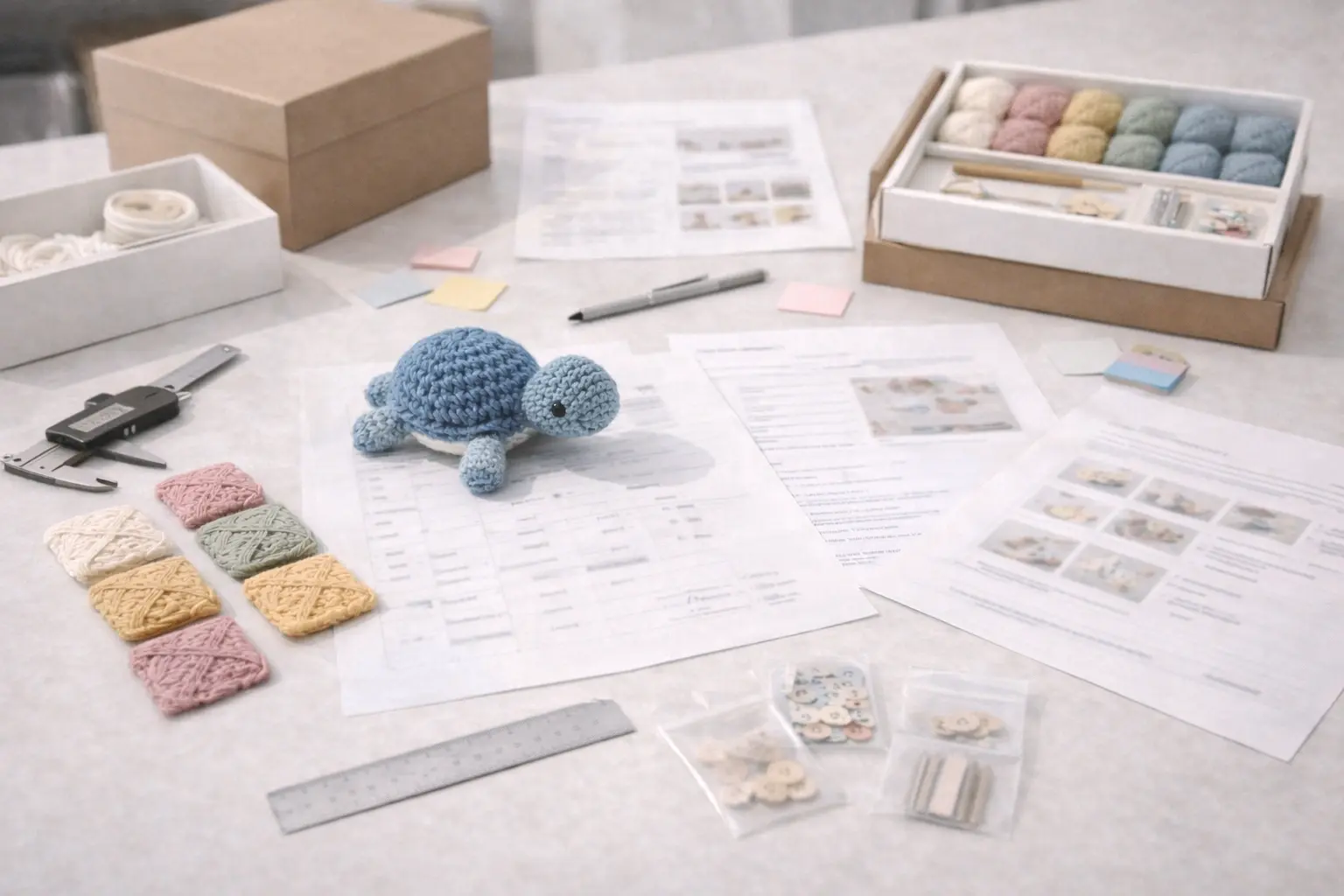
Project Control, Not Guesswork
Gated approvals help keep scope stable and outputs consistent, especially when scaling multi-SKU kit programs.
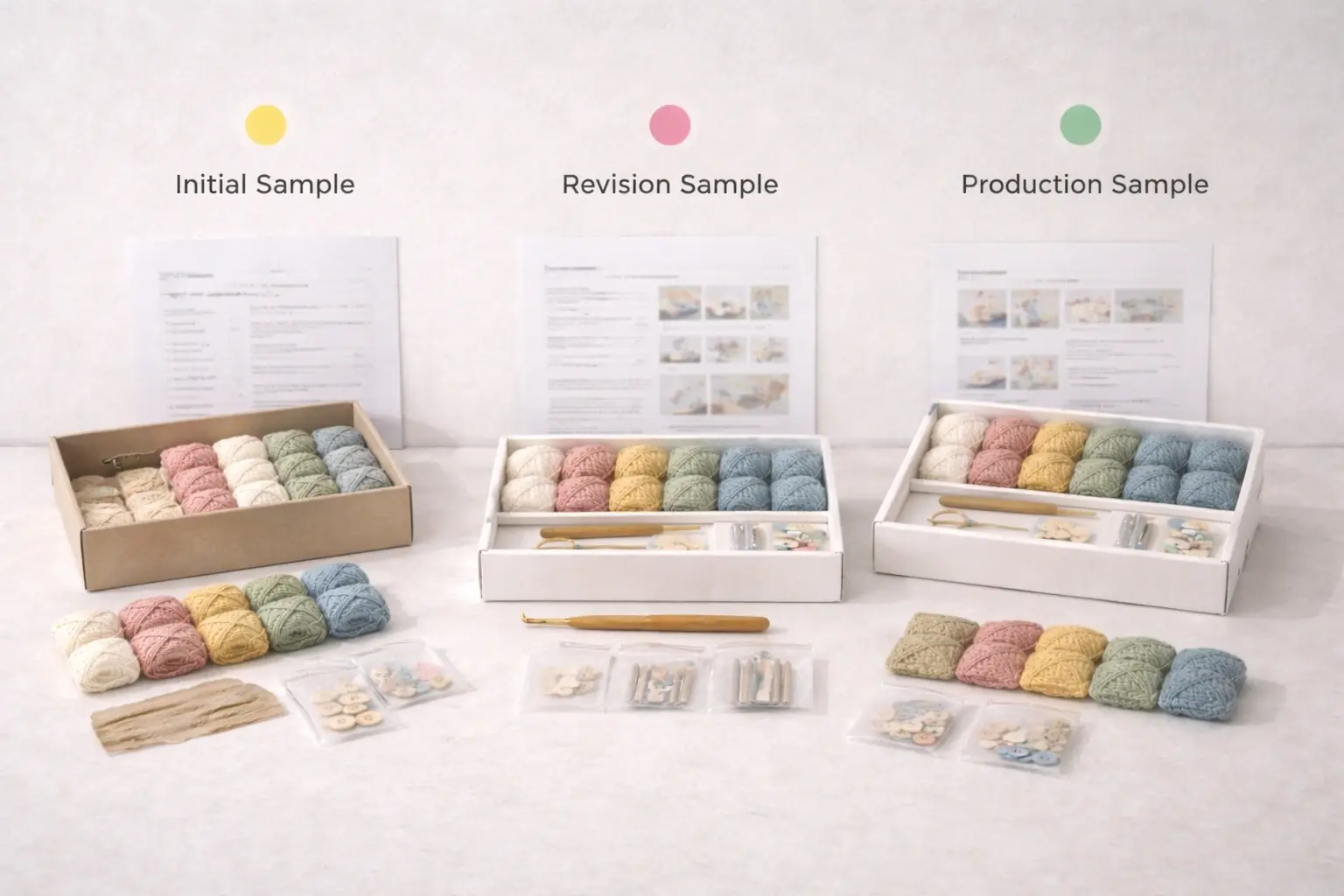
Sampling Rhythm (Clear Definitions)
Each sample stage has a clear purpose and acceptance checklist to reduce back-and-forth and keep development efficient.
Prototype for structure, sizing, and core stitch logic.
Refined for user clarity, cost, and production feasibility.
Built with production method and QC checkpoints.
Proof of Method
Short practical examples of how structured ODM reduces risk and improves consistency.
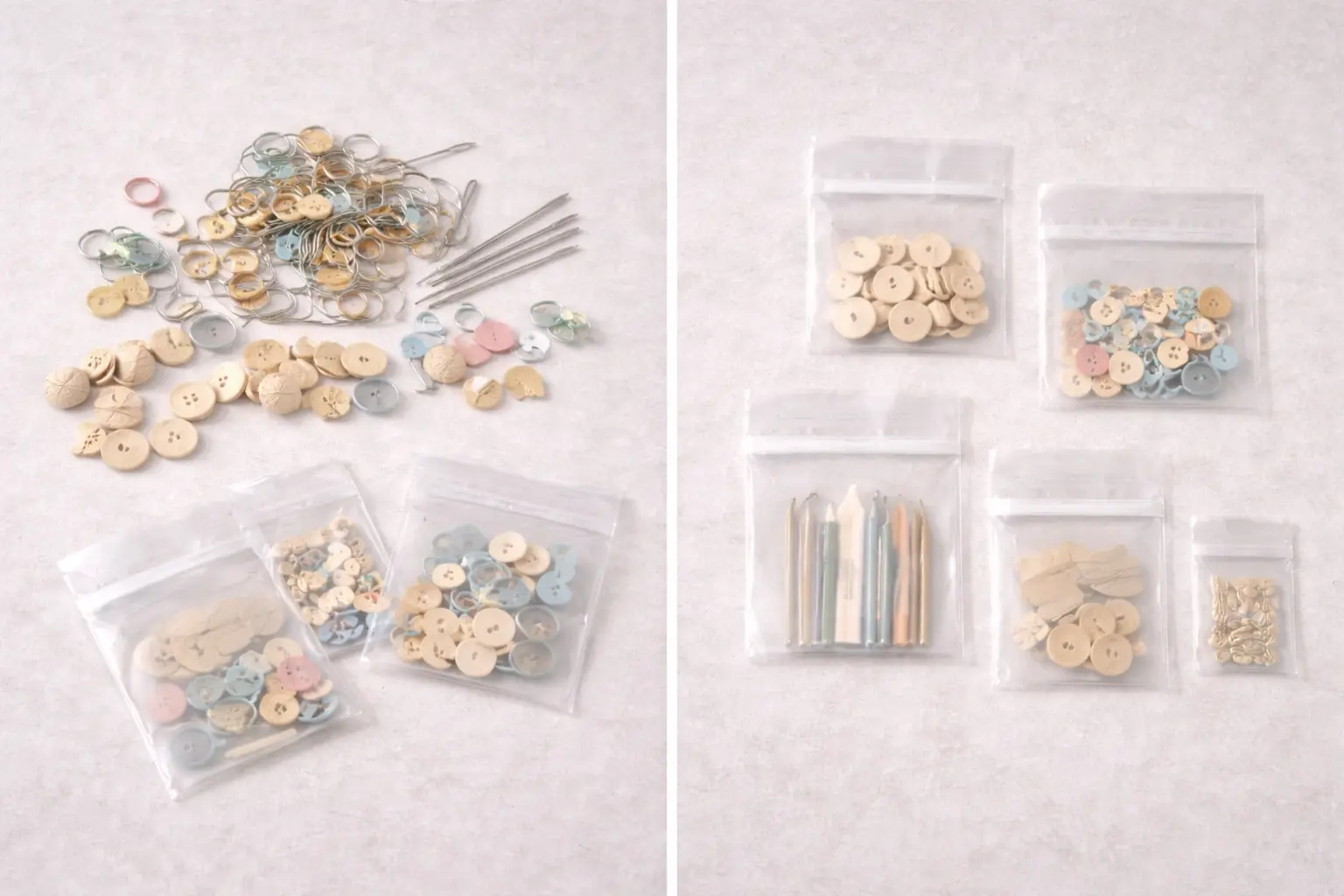
Case 1: Reduce Assembly Confusion
Issue: beginner users were getting stuck on unclear steps and mis-placed components. Fix: instruction restructuring, component labeling, and assembly SOP checkpoints.
- Added component maps and step gates in instructions
- Standardized accessory packs to avoid mid-batch substitutions
- Built a simple QC checklist to catch missing items before sealing
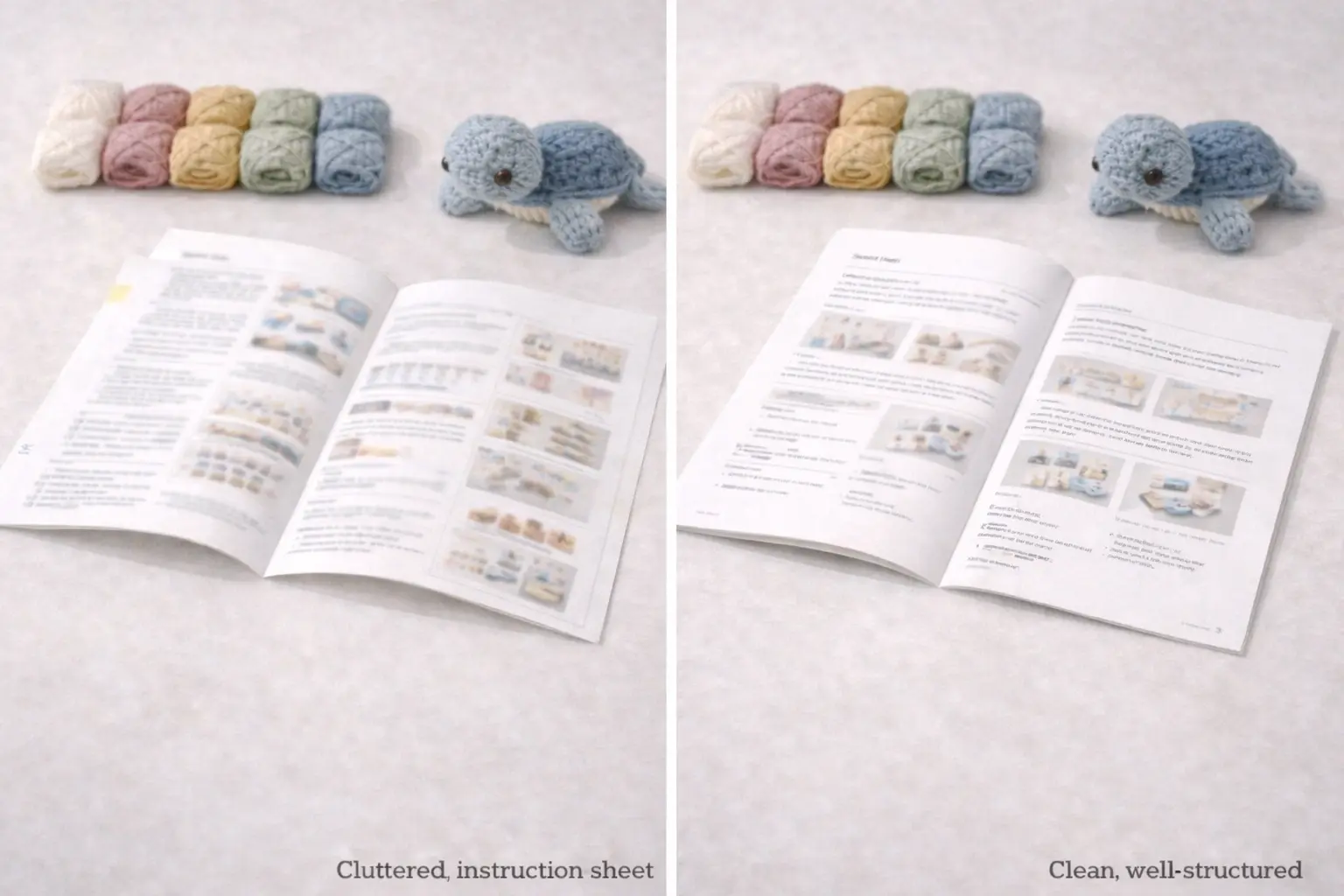
Case 2: Stabilize Multi-SKU Programs
Issue: multi-SKU launches drifted in materials and packaging execution. Fix: spec freeze gates, substitution rules, and packaging flow validation.
- Locked BOM and approved alternates by phase gate
- Validated packaging inserts and label areas before PP sample
- Implemented batch QC checkpoints at assembly and final inspection
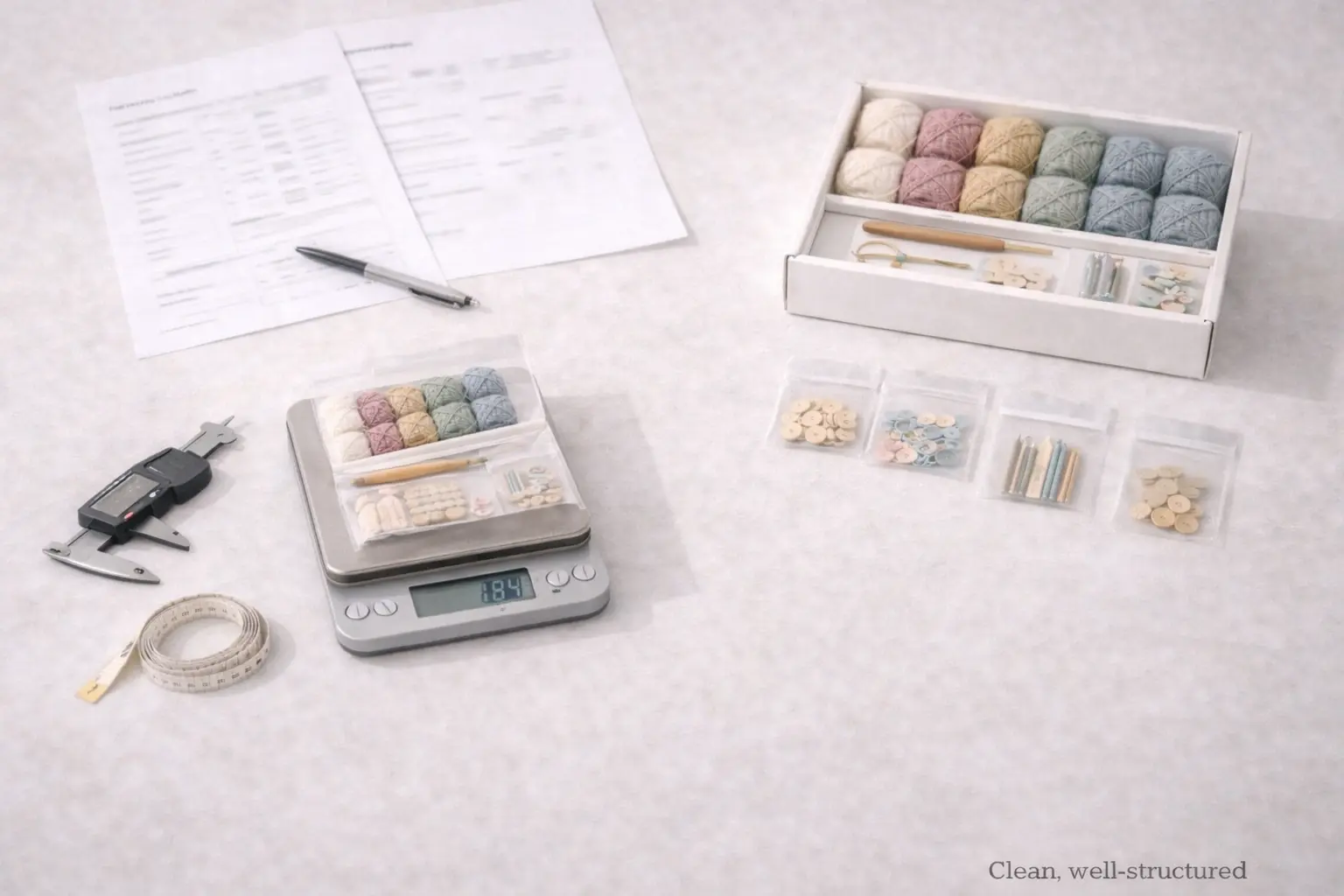
Quality & Compliance Built into Development
Development works better when quality verification and documentation planning happen early. That reduces surprises later in packaging, labeling, and destination-market preparation.
FAQ
Common buyer questions for ODM crochet kit development.
What do you need from us to start ODM development?
How long does the ODM process usually take?
Can you support compliance requirements?
Can we sign an NDA before sharing details?
What impacts MOQ and unit pricing the most?
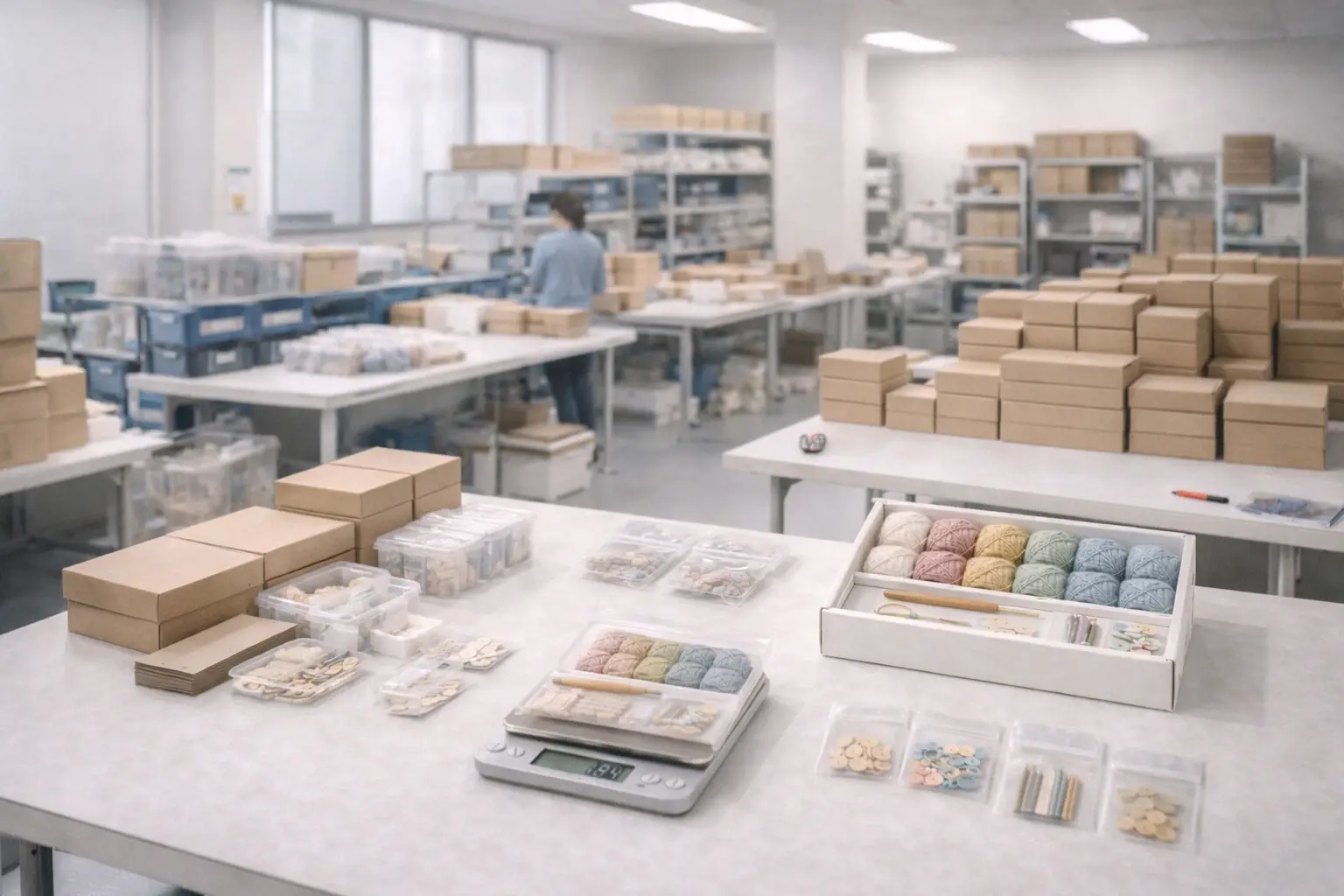
Ready to Launch Your ODM Project?
Share your goals and references. We’ll reply with a clear development plan, sampling rhythm, and a quote framework tailored to your kit complexity and target market.