
Instruction & Pattern System
Scalable crochet kit instruction systems designed for global manufacturing, multilingual rollout, and more consistent user success across skill levels.
Built for DTC brands, retail chains, education programs, and gift channels that require consistent, scalable instructions.
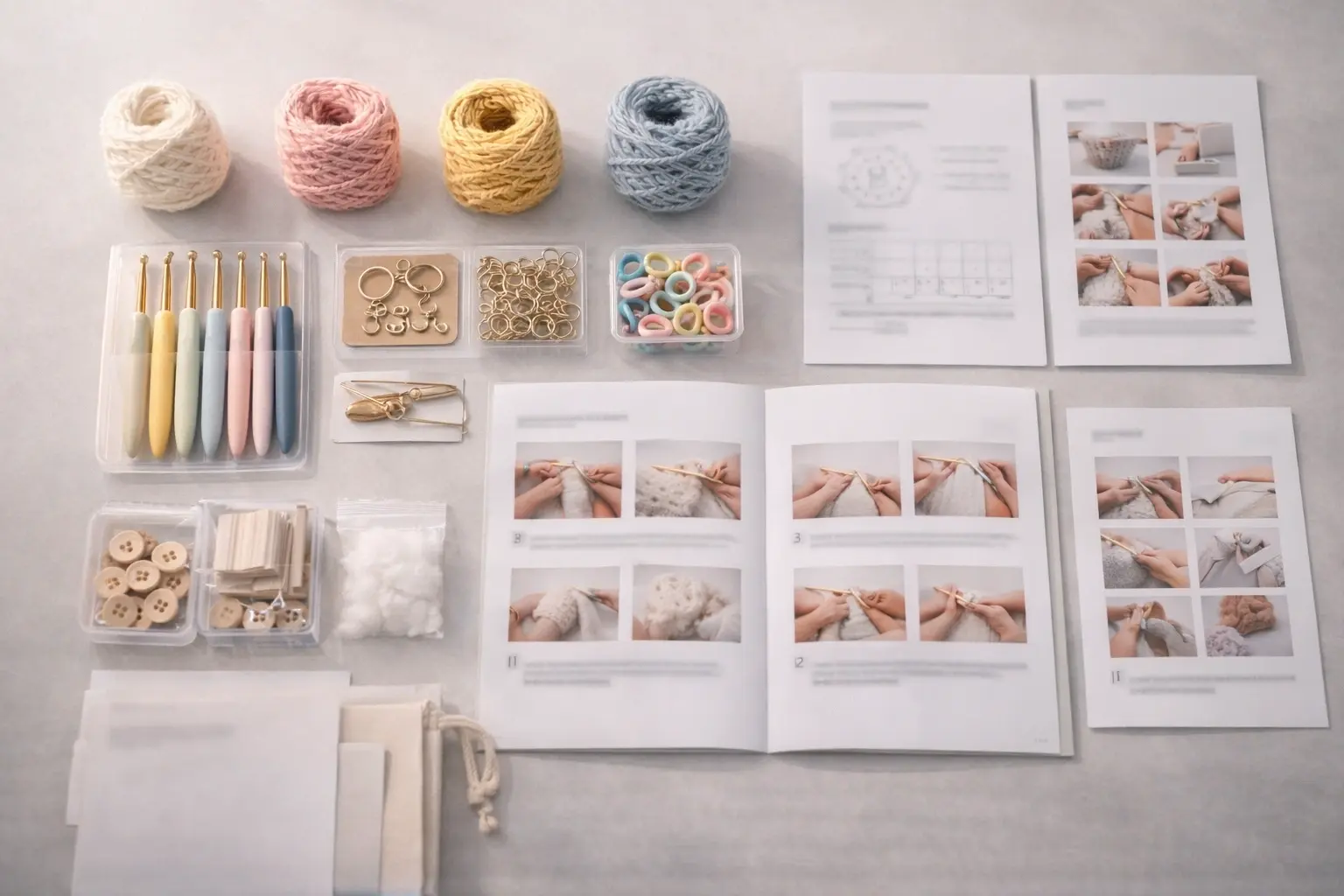
Modular Tutorials
Standardized instruction modules that can be assembled for different skill levels, kit types, and product families.
Outcome: faster instruction builds, lower content inconsistency, and easier SKU expansion.
Multilingual Ready
Translation-optimized structure for multilingual crochet instructions with glossary control and market-specific adaptation.
Outcome: less translation rework, clearer local-market wording, and more consistent global rollout.
Reusable Components
A tested library of reusable instruction blocks designed to improve consistency across product lines.
Outcome: improvements roll out across multiple kits using the same instruction components.
Why Instruction Systems Matter
Instructions are not just content. For DIY crochet kits, they directly affect completion rate, customer satisfaction, support workload, and product reviews.
Reduce Customer Failure
Better tutorial logic helps more users finish projects successfully, especially in beginner and gift-oriented kits.
Lower Support Cost
Fewer confusion points mean fewer customer questions, complaints, and replacement requests.
Improve Reviews
Clearer instructions help improve user experience, which can support stronger ratings and repeat demand.
Enable Scaling
Standardized instruction systems make it easier to expand into multi-SKU and multilingual product programs.
Systematic Tutorial Framework
Built for manufacturing scale, ensuring consistent user experience and more reliable completion outcomes across global markets.
Level-Based Progression
Structured skill development from absolute beginner to advanced techniques, with milestone checkpoints that keep tutorials aligned to user ability.
Visual Learning System
Standardized photography, diagrams, and video integration points support more consistent crochet kit instructions across different products.
Quality Checkpoints
Built-in validation steps and troubleshooting guides help prevent common mistakes and reduce support tickets after launch.
- Gauge verification points
- Progress measurement guides
- Common error prevention
What You Get / What We Need
- Instruction architecture + component selection map
- Pattern layout spec + step photo / diagram standards
- Video script framework + shotlist (optional)
- Translation keys + glossary for consistent terminology
- Target markets & languages + brand tone
- SKU list + difficulty targets + packaging constraints
- Existing instructions or customer support pain points
- Required compliance / safety copy for your markets
Instruction Architecture
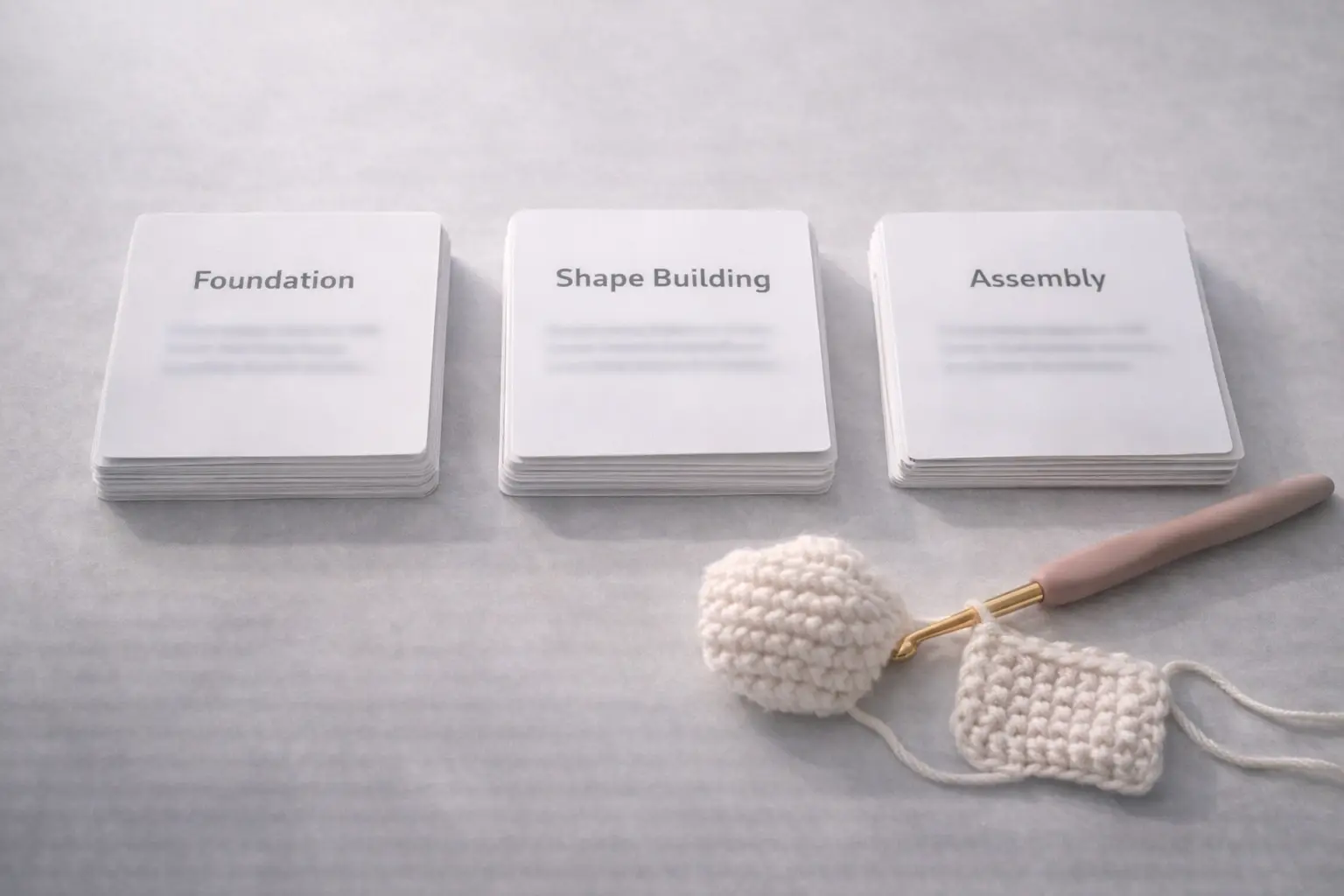
- • Mix and match for custom difficulty levels
- • Consistent terminology across all kits
- • Reduced translation and localization cost
- • Faster new product development
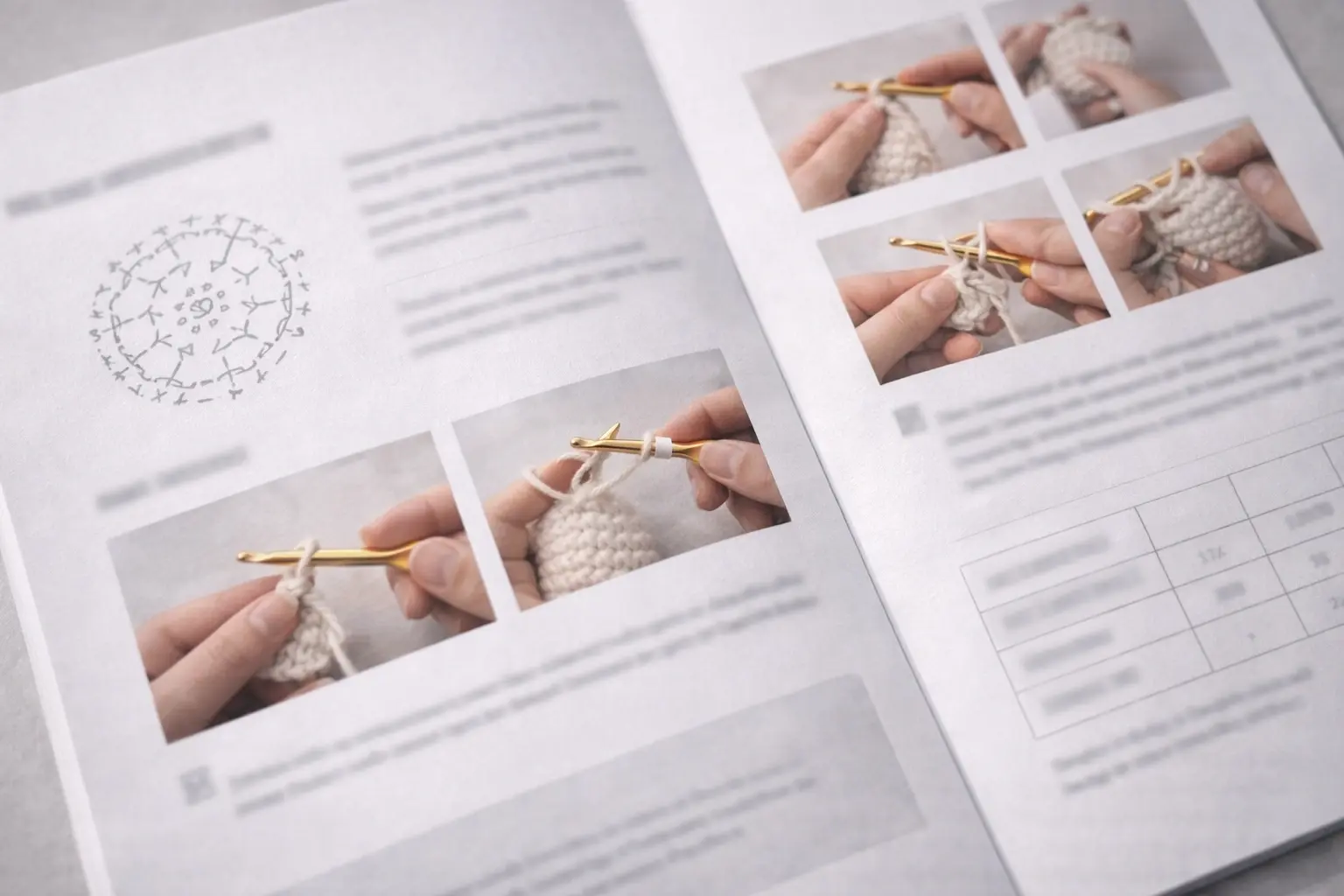
Sample Preview
A single page preview that clarifies deliverables for your team and reduces onboarding time.
Translation Key Example
Structured keys reduce translation inconsistency and simplify global updates.
{
  "instruction.foundation.hook_grip.title": "How to Hold the Hook",
  "instruction.foundation.hook_grip.desc": "Keep a relaxed grip to maintain even tension.",
  "instruction.shape.increase.title": "Increase (inc)",
  "instruction.shape.increase.note": "Two stitches in one stitch to expand the shape.",
  "instruction.qc.gauge_check.title": "Gauge Check",
  "instruction.qc.gauge_check.desc": "Verify size after Round 3 before continuing."
}
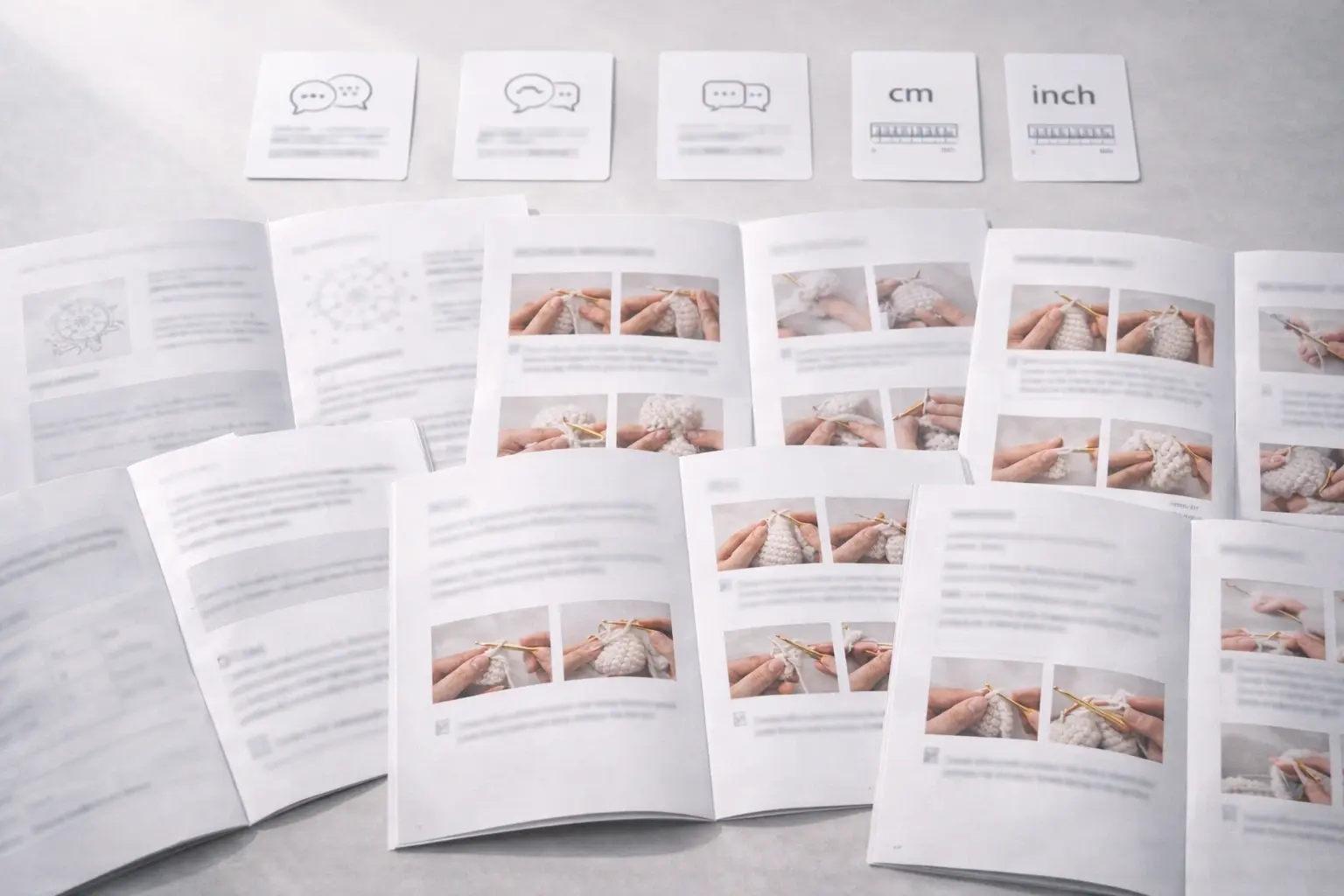
Global Language Support
Translation-optimized instruction framework supporting multilingual crochet tutorials with cultural adaptation for global markets.
Primary Markets
Tip: terminology is standardized via shared glossary control and translation keys.
Cultural Adaptation
- Regional terminology preferences
- Measurement unit conversion
- Local crafting conventions
- Market-specific examples
Expansion Markets
Translation Optimization Process
Source Preparation
Structured content with translation keys and context notes
Expert Translation
Craft-specialized translators with regional knowledge
Cultural Review
Local market validation and terminology adjustment
User Testing
Native speaker validation with actual kit samples
Component Library System
Standardized, reusable instruction components that reduce development time while helping maintain consistency across all products.
Foundation Components
Technique Components
Support Components
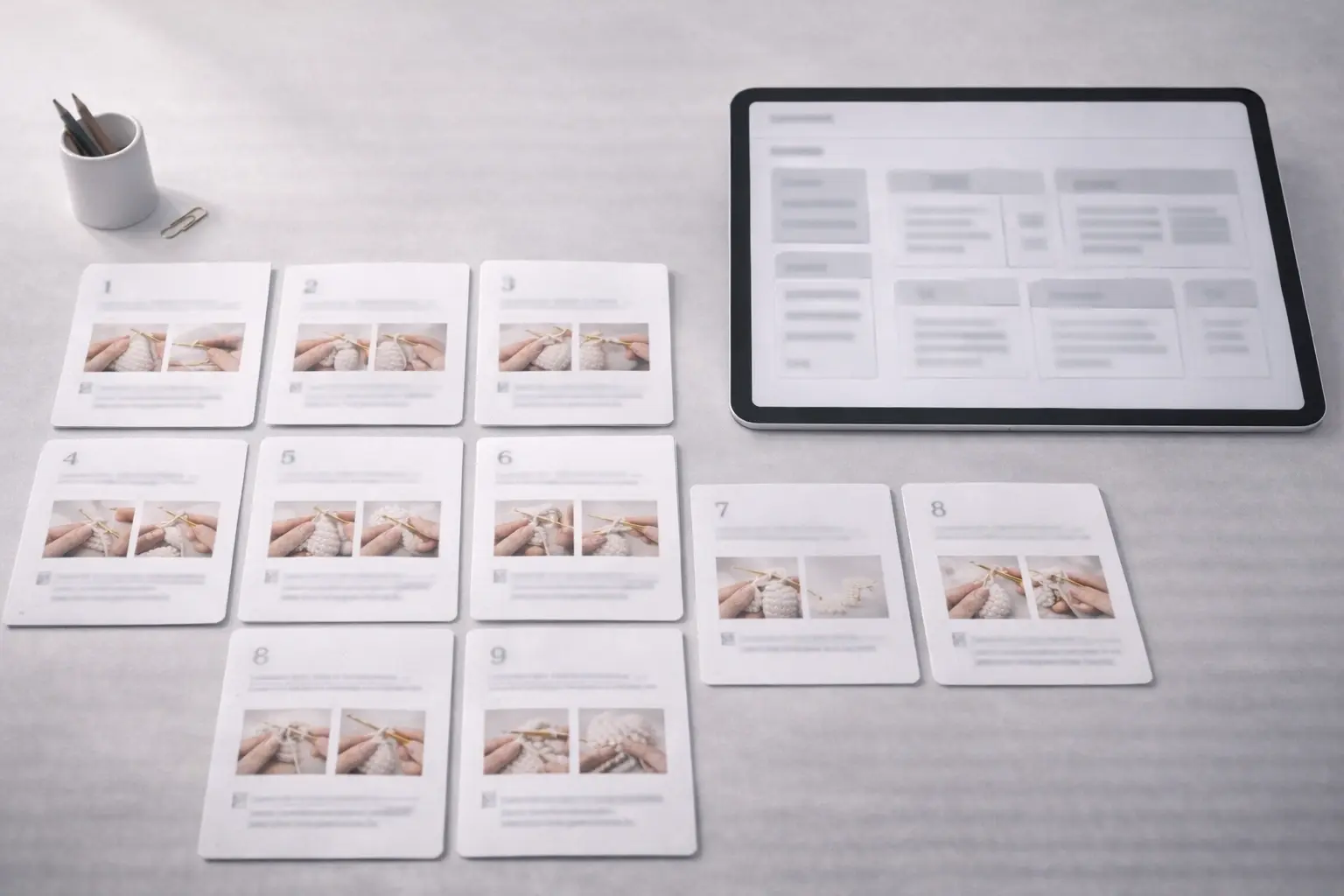
Development Efficiency
Faster Development
Reusable instruction blocks help reduce the time needed to build new crochet kit tutorials.
Consistent Quality
Tested components help maintain more stable user experience across different products.
Translation Ready
Modular structure improves localization workflow and reduces terminology drift.
Scalable Updates
Component updates can be rolled out across multiple product lines that share the same logic.
Component Metrics
Definitions: “Components” = reusable instruction blocks. “Products” = kits using this modular framework.
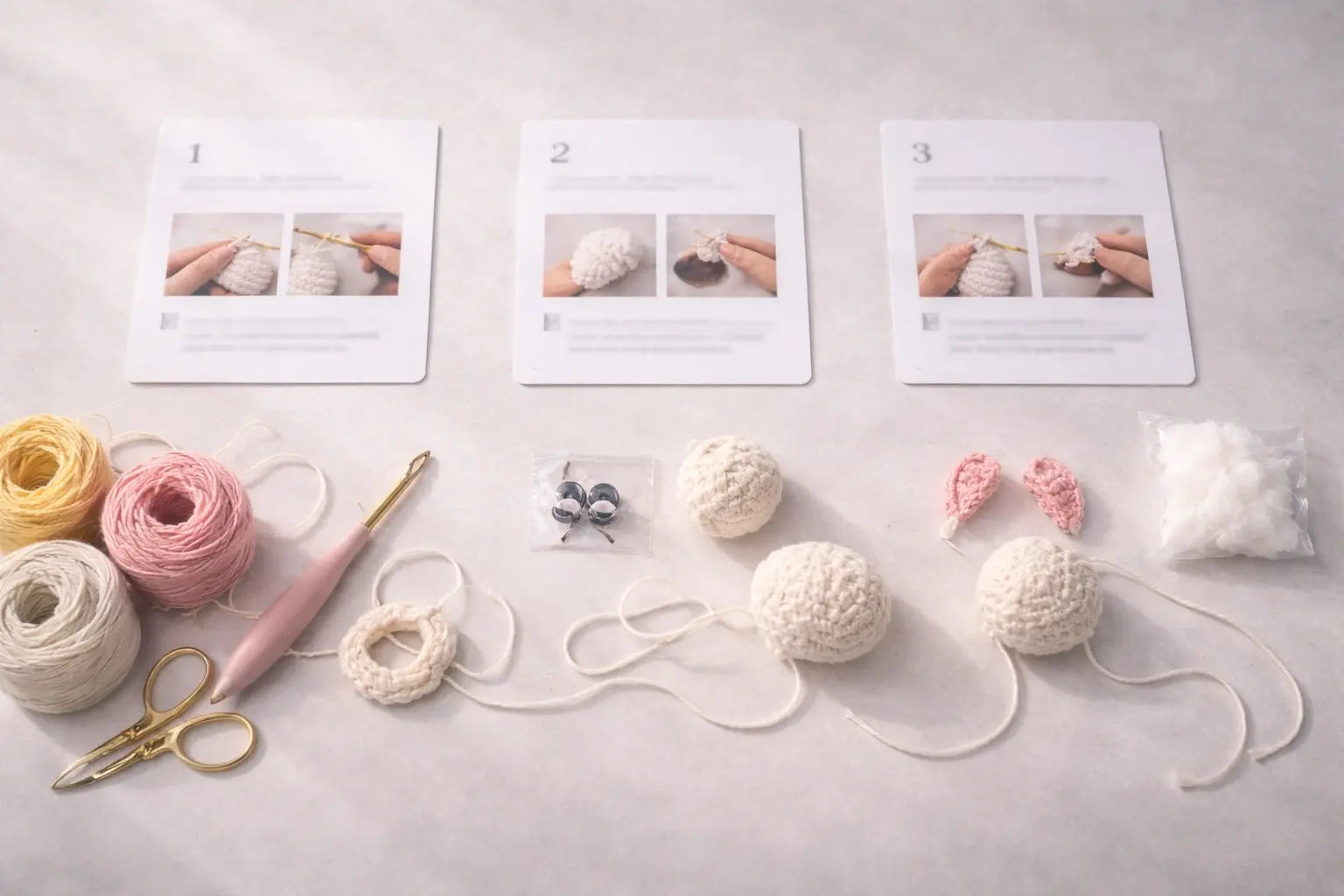
Component Assembly Example
FAQ
Common questions about crochet instruction systems, localization, and reusable tutorial components.
Why is an instruction system important for DIY crochet kits? ▾
For DIY crochet kits, instructions directly affect completion rate, customer satisfaction, reviews, and support workload. A stronger system helps reduce confusion and improve consistency across SKUs.
Can this system support multilingual crochet instructions? ▾
Yes. The structure is designed for multilingual rollout through translation keys, glossary control, and layout rules that support local-market adaptation.
What do you mean by reusable instruction components? ▾
Reusable components are instruction blocks such as stitch tutorials, troubleshooting steps, finishing guidance, and quality checks that can be used across multiple products.
Can this be applied to existing product lines, not just new development? ▾
Yes. Existing crochet kit lines can be reorganized into a more modular structure to improve translation efficiency, instruction consistency, and customer clarity.
Ready to Implement Our Instruction System?
Apply a proven crochet tutorial system, multilingual structure, and reusable component library to your DIY product line.
Download includes: sample components, naming conventions, photo specification checklist, and translation key structure.