

Kit Assembly & Standard Operating Procedures
Documented crochet kit assembly SOPs designed to improve assembly consistency, support batch traceability, and strengthen final quality control across production sites.
Sampling plans and acceptance criteria are configured by lot size, inspection level, and customer-specific requirements.
Why This SOP System Matters
For B2B buyers, assembly SOPs are not just internal documents. They directly affect consistency, inspection outcomes, retail readiness, and repeat-order confidence.
Reduce Missing Components
Standardized packing logic and verification points help lower missing-item risk across batches.
Improve Retail Consistency
More stable assembly and packaging execution support cleaner shelf presentation and brand reliability.
Support Audits & Inspections
Documented SOPs, batch codes, and QC records make onboarding, audits, and inspections easier to support.
Enable Multi-SKU Scaling
Structured workflows allow more efficient execution when expanding assortments and repeat orders.
Assembly Consistency Framework
Standardized crochet kit assembly processes help maintain quality consistency across production sites, SKU types, and batch sizes.
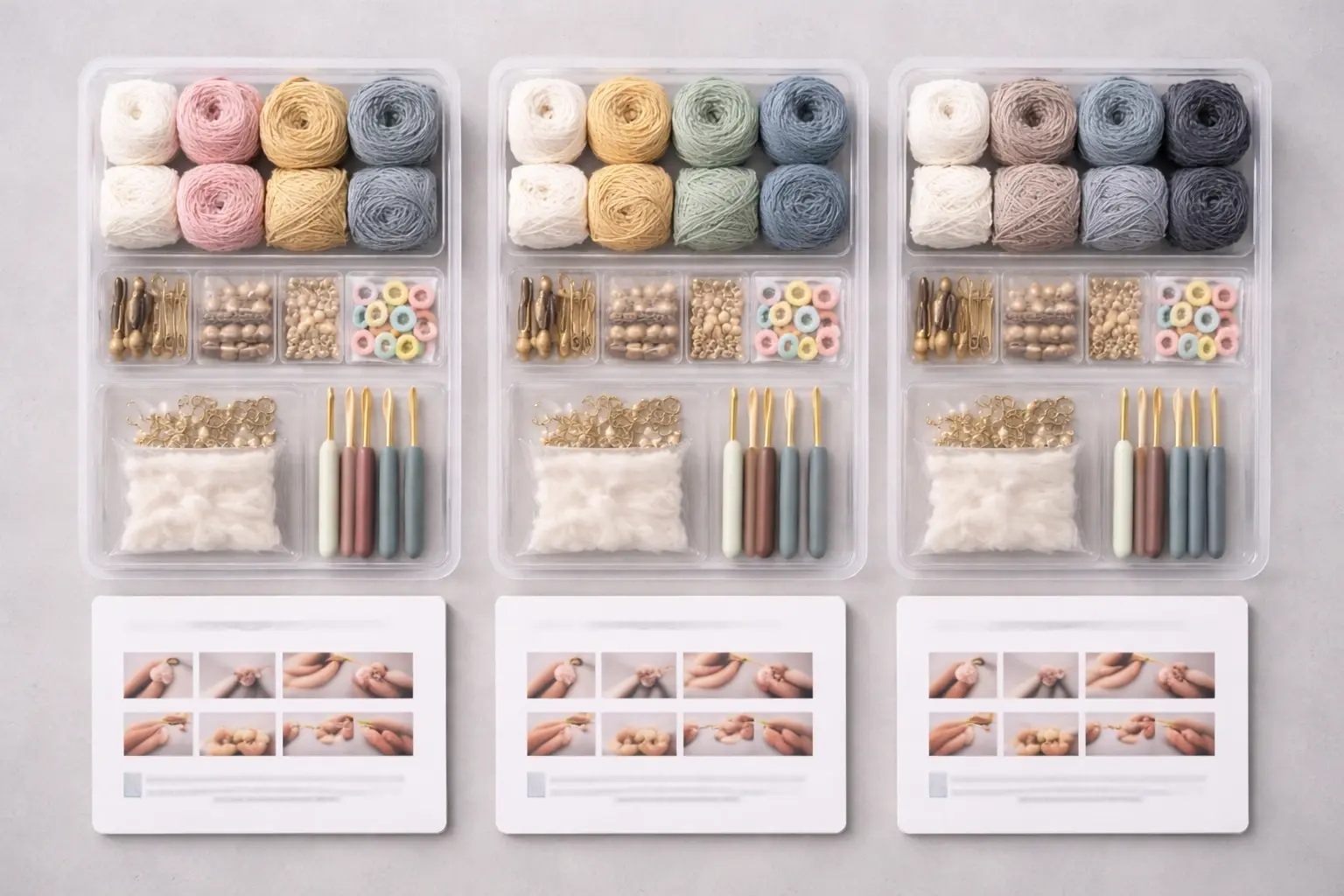
Standardized Components
Pre-measured yarn quantities, standardized accessories, and controlled packaging materials reduce assembly variation.
- Yarn weight tolerance: ±2g
- Accessory count verification
- Instruction card version control
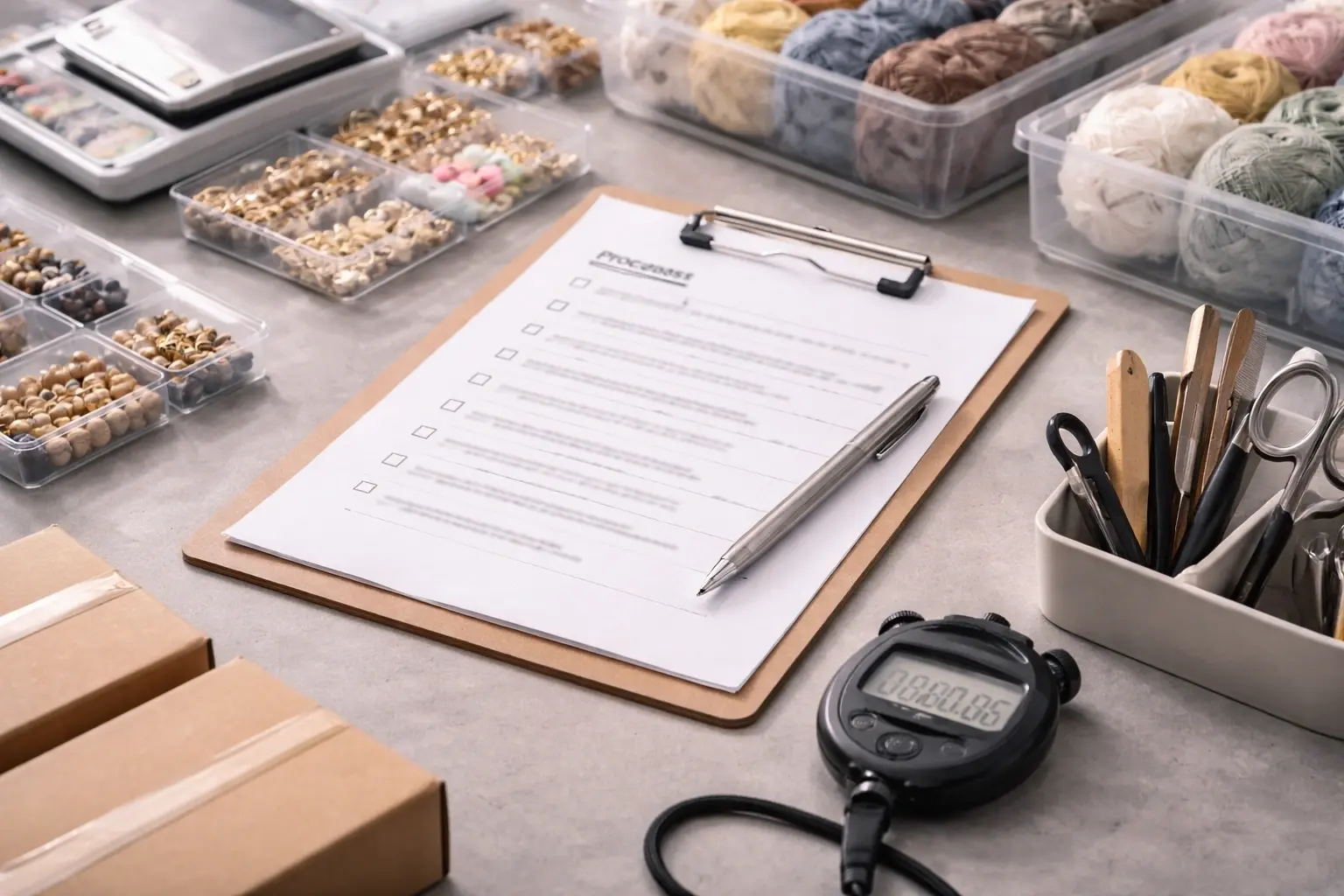
Process Control
Documented SOP sequences and in-process checks help keep kit assembly more stable across different operators and sites.
- Assembly time standards
- 5-node inspection structure
- Batch traceability linkage
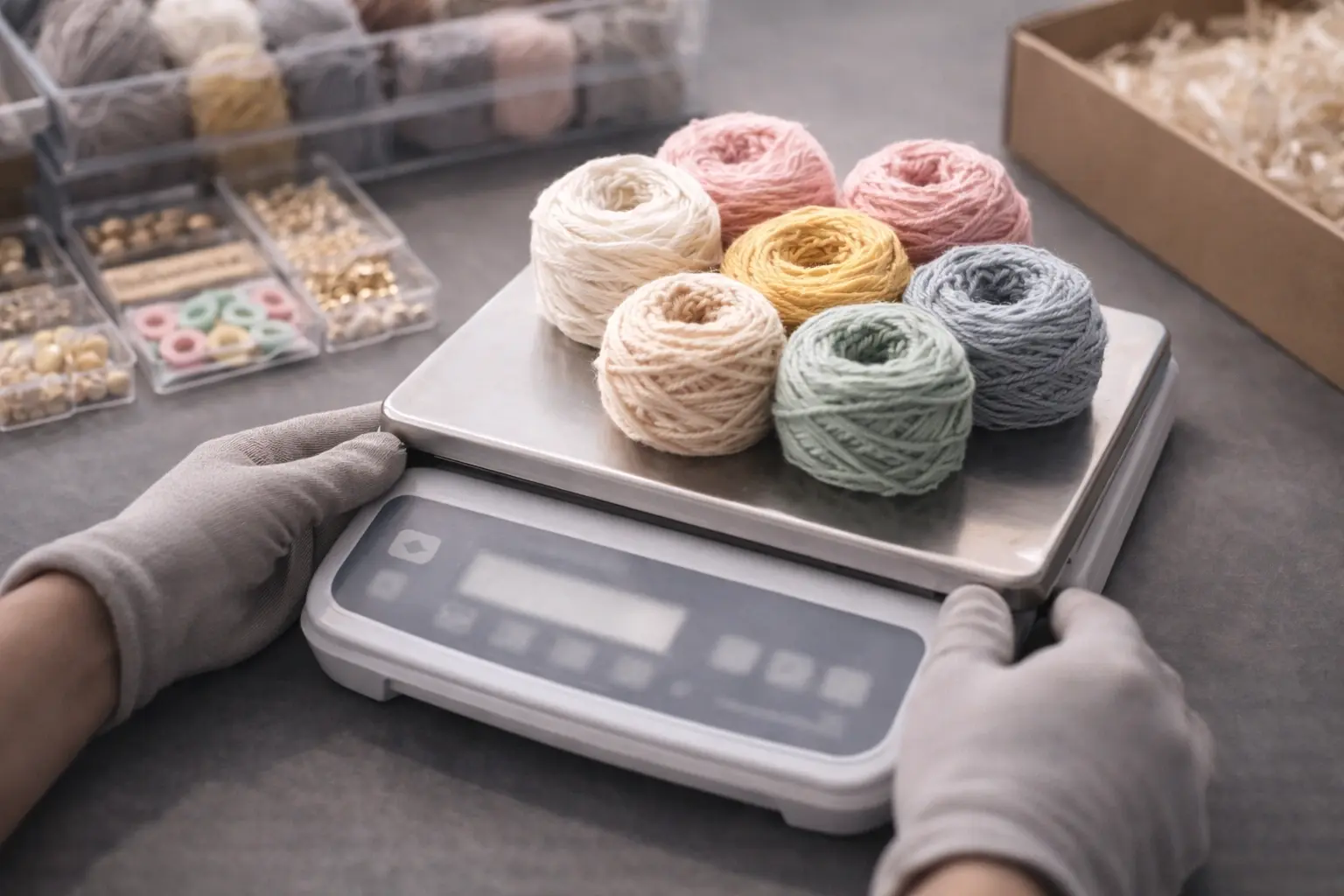
Training & Verification
Training and verification routines help ensure assembly staff execute documented standards more consistently.
- Onboarding training workflow
- Periodic skill validation
- Continuous improvement feedback
Traceability & CAPA Loop
Each production batch is tracked through records, inspection status, and follow-up actions, helping support corrective action and verification when deviations occur.
Quality Control Nodes
Multi-stage quality control for crochet kit assembly helps reduce defects before final shipment and supports more predictable batch release.
Sampling plans typically follow ISO 2859-1 / ANSI-ASQ Z1.4 and may be adjusted by customer requirements and inspection level.
Incoming Materials
Pre-Assembly
Kit Assembly
Packaging
Final Inspection
Inspection Evidence
Dedicated QC stations support sampling, weighing, verification, and documentation before final release.
Documents remain blurred and non-readable to protect internal and customer information.
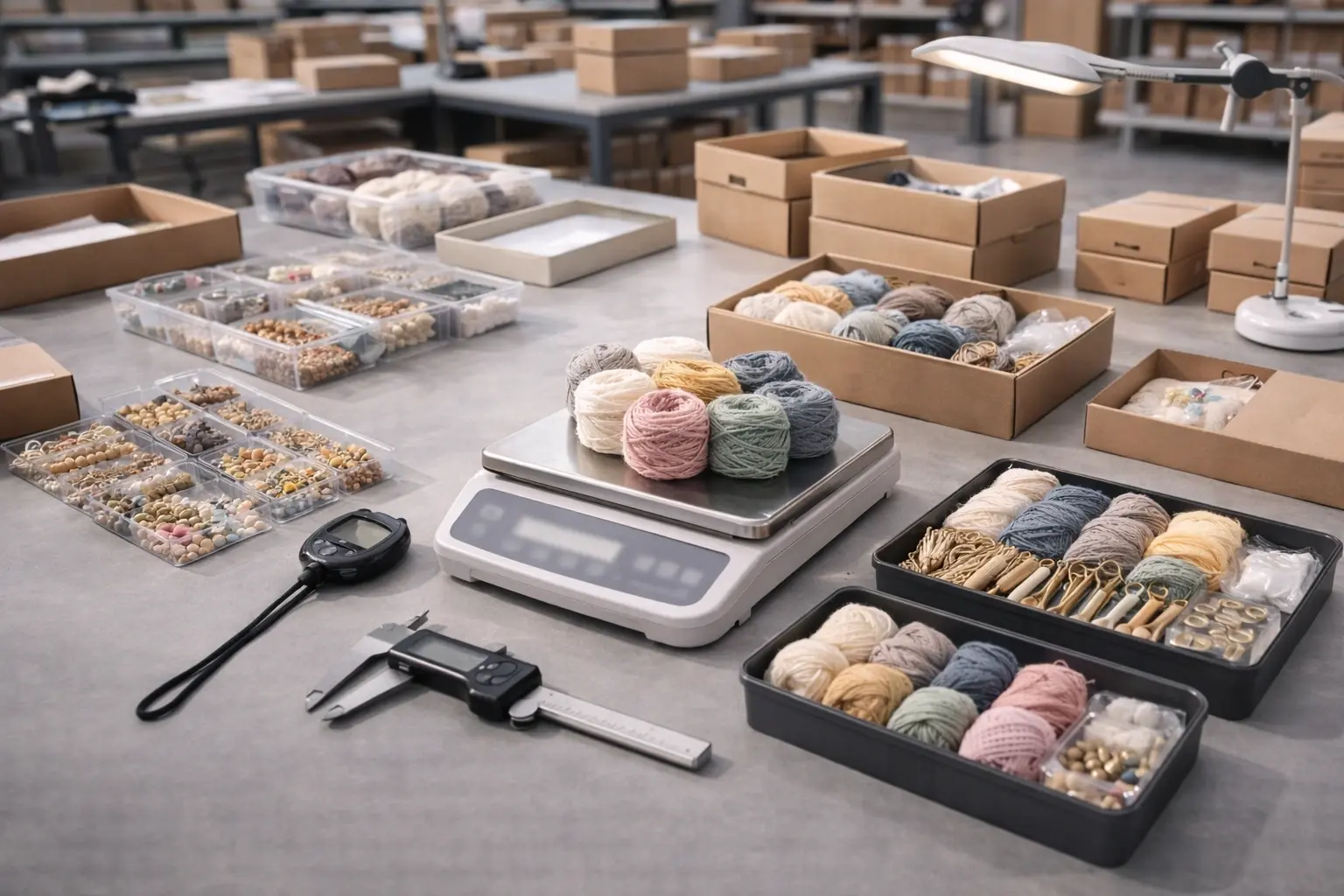
Standard Operating Procedures
Clear crochet kit assembly SOPs support more consistent execution across internal teams, workshops, and partner factories.
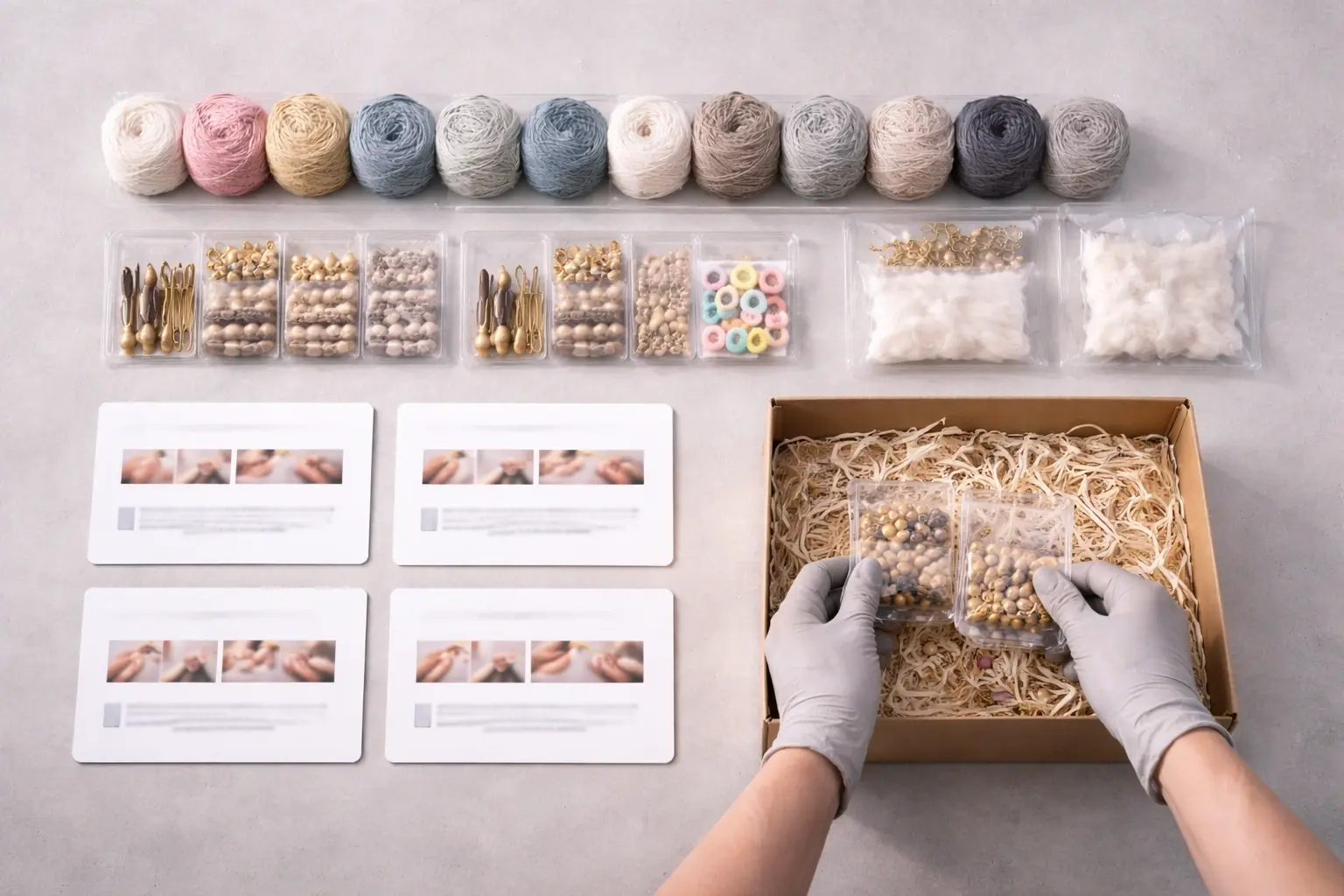
Assembly Protocol
Structured steps with time standards and checkpoints
Step 1: Material Preparation (~60 seconds)
- • Verify yarn colors against master sample
- • Weigh yarn skeins within tolerance
- • Count and inspect accessories
- • Confirm instruction card version
Step 2: Component Assembly (~90 seconds)
- • Place yarns in designated order
- • Insert accessories into sleeves or bags
- • Position instruction card correctly
- • Perform visual completeness check
Step 3: Packaging (~90 seconds)
- • Place components into final packaging
- • Apply product label and batch code
- • Seal package to standard
- • Mark completion record
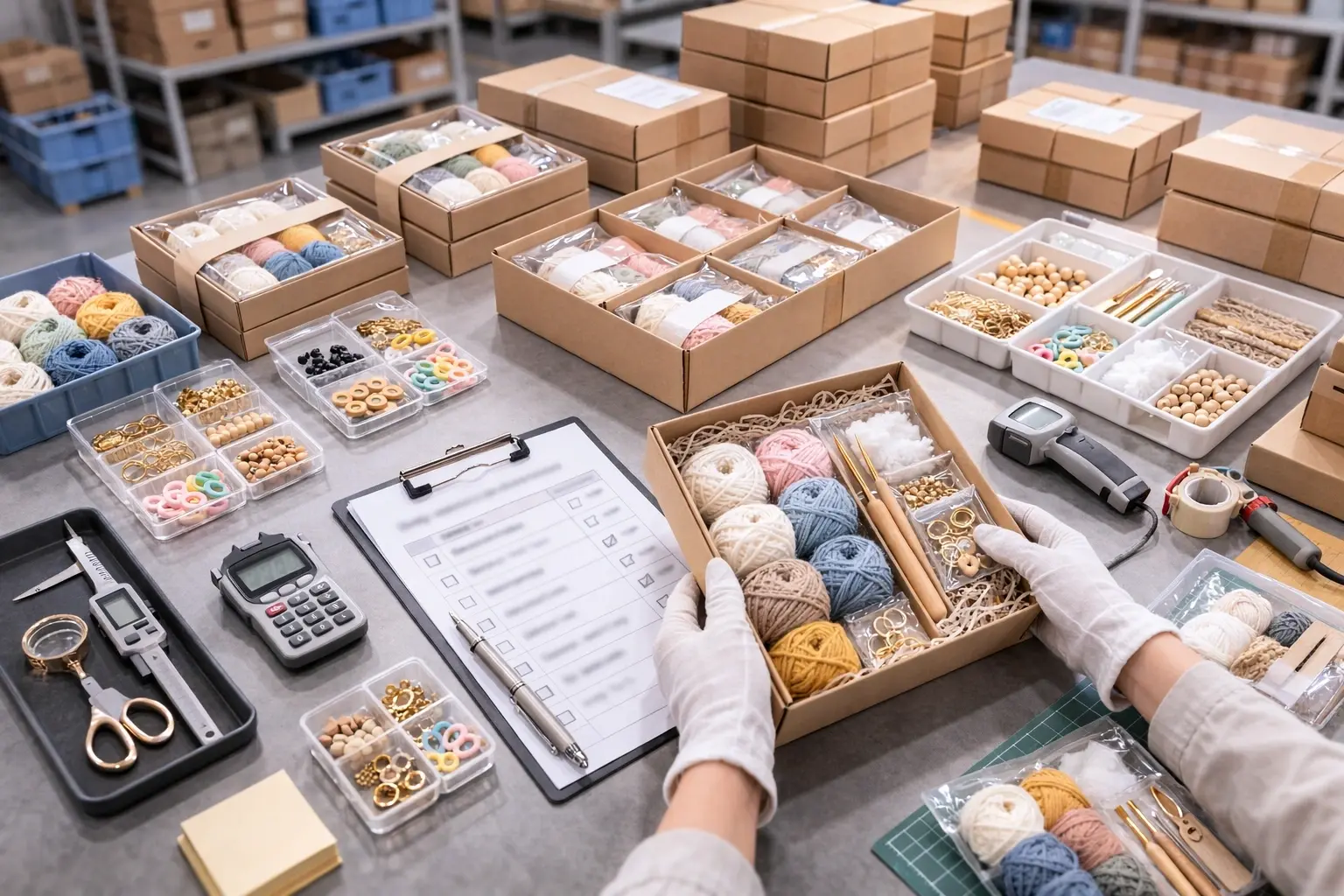
Quality Control Protocol
Sampling, defect classification, and batch release
Sampling Method
- • Usually based on ISO 2859-1 / ANSI-ASQ Z1.4
- • Configured by lot size and inspection level
- • Customer-specific requirements supported
Critical Defects
- • Missing components
- • Wrong yarn colors
- • Damaged packaging affecting product integrity
- • Incorrect labeling or traceability code
Major Defects
- • Weight deviation beyond tolerance
- • Instruction card quality issues
- • Packaging seal problems
- • Accessory defects affecting usability
Metric definition: final inspection pass rate, 30-day rolling average.
Performance Metrics
Monitoring and continuous improvement across kit assembly operations with clearly defined KPI references.
KPI Definitions
- • Final Inspection Pass Rate: percentage of inspected kits passing final release criteria.
- • Minutes per Kit: average assembly time on standard SKU set.
- • Peak Capacity: maximum aggregated output under standard staffing and stable material supply.
- • Certified Workforce: personnel who passed onboarding and periodic skill validation.
Documentation & Resources
Documentation packages designed for customer onboarding, audit support, and more consistent execution across manufacturing partners.
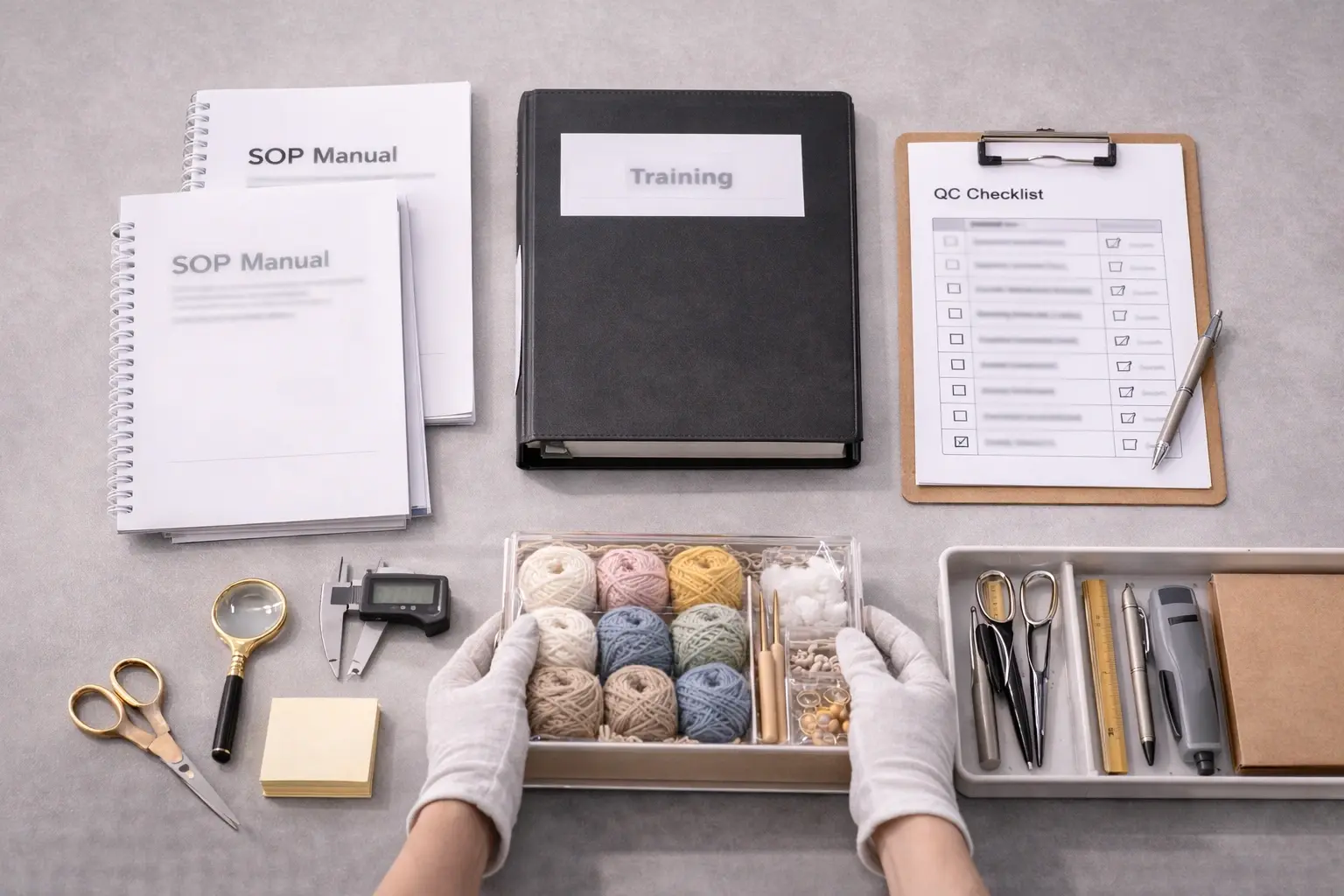
Assembly Manual
Step-by-step visual instructions with time standards and checkpoints.
Download PDF →FAQ
Common questions about crochet kit assembly SOPs, AQL inspection, and quality control systems.
Do you provide documented SOPs for kit assembly? ▾
Yes. We can provide SOP-related documentation, assembly logic, QC checkpoints, and sample record formats depending on project scope and customer requirements.
How do you control missing components in crochet kits? ▾
We use component count verification, in-process checks, final inspection, and batch traceability to reduce missing-item risk during assembly.
Do you use AQL inspection for finished kits? ▾
Typically yes. Sampling plans are usually based on ISO 2859-1 / ANSI-ASQ Z1.4, then adjusted by lot size, inspection level, and customer-specific requirements.
Can this system support customer audits or onboarding reviews? ▾
Yes. The documented workflow, QC records, traceability structure, and training logic are designed to better support audit-oriented customers and onboarding discussions.
Ready for Consistent Quality?
Partner with U-My Manufacturing for documented kit assembly SOPs, traceability logic, and measurable quality control workflows across your production runs.
ISO 9001 • Batch Traceability • AQL-Based Sampling • Documented SOPs • Continuous Improvement