Capacity Planning Template
Download an editable multi-SKU planning workbook to organize crochet kit demand, component requirements, production schedules and shipping plans before requesting a manufacturing review.
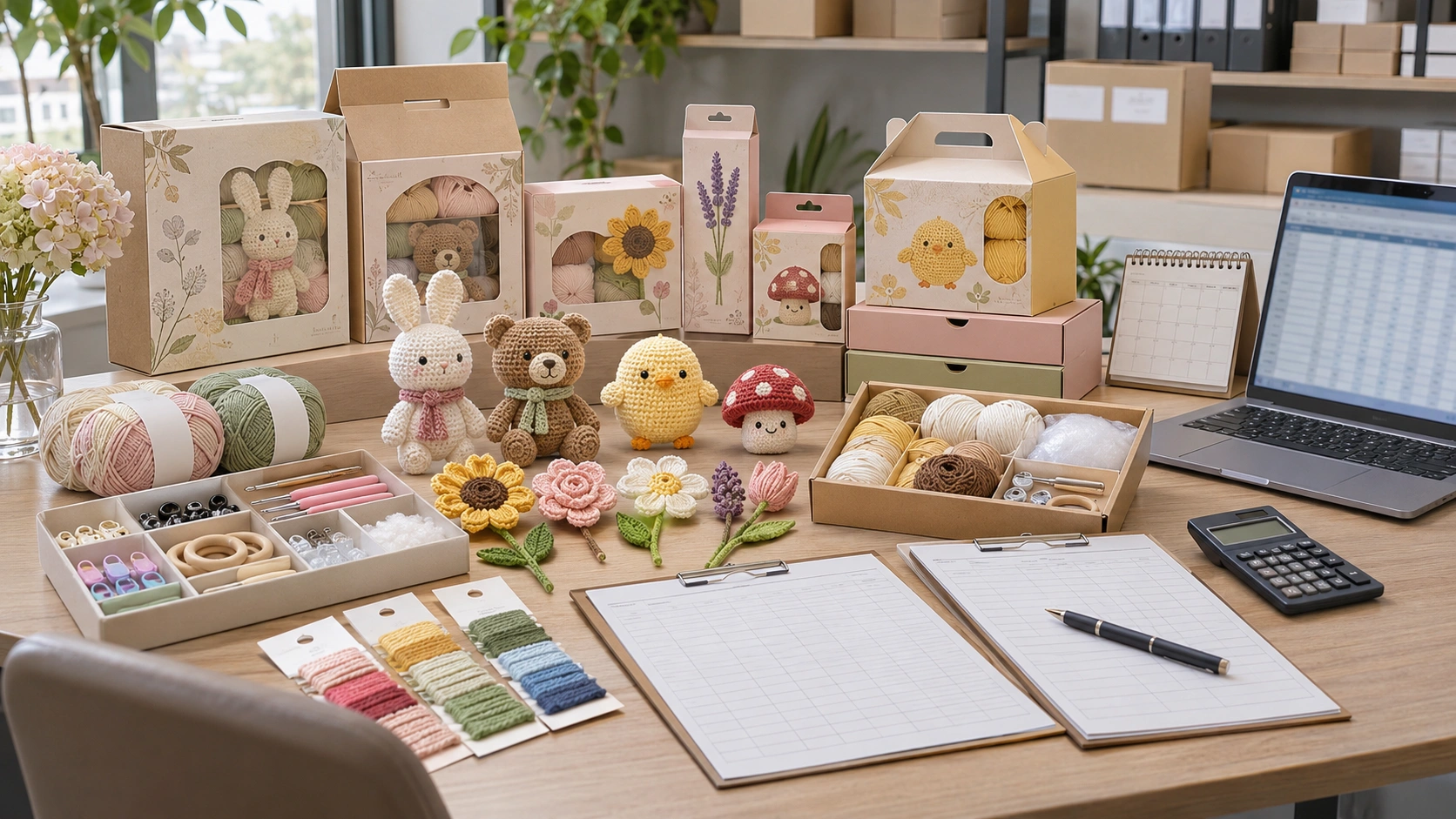
One Workbook for Multi-SKU Coordination
Turn a seasonal assortment or retail replenishment plan into a structured starting point for purchasing and manufacturing discussions.
Plan by SKU
Separate forecasts, firm order quantities and buffers. Check each SKU against a preliminary MOQ baseline.
Review Components
Calculate yarn and accessory requirements against available and incoming material quantities.
Coordinate Dispatch
Build an indicative production schedule, track packed quantities and organize shipment batches.
What's Inside the Excel Workbook?
Seven worksheets connect buyer assumptions with SKU demand, component planning, manufacturing schedules and shipment preparation.
START HERE & Settings
Read guidance and adjust MOQ, working days, material loss, buffer and capacity assumptions.
SKU Demand
Enter forecasts, confirmed order quantities, target shipment dates and priorities for each SKU.
Material Plan
Enter BOM quantities per kit and identify stock, incoming material and component shortages.
Production Plan
Enter planning lot sizes, assumed daily output and expected start dates to estimate working days.
Shipment Plan
Organize planned dispatch quantities, packing progress, destinations and transport modes.
Dashboard
Review total required kits, scheduled lots, shortage alerts and planned shipment balances.
Plan Components Before Production
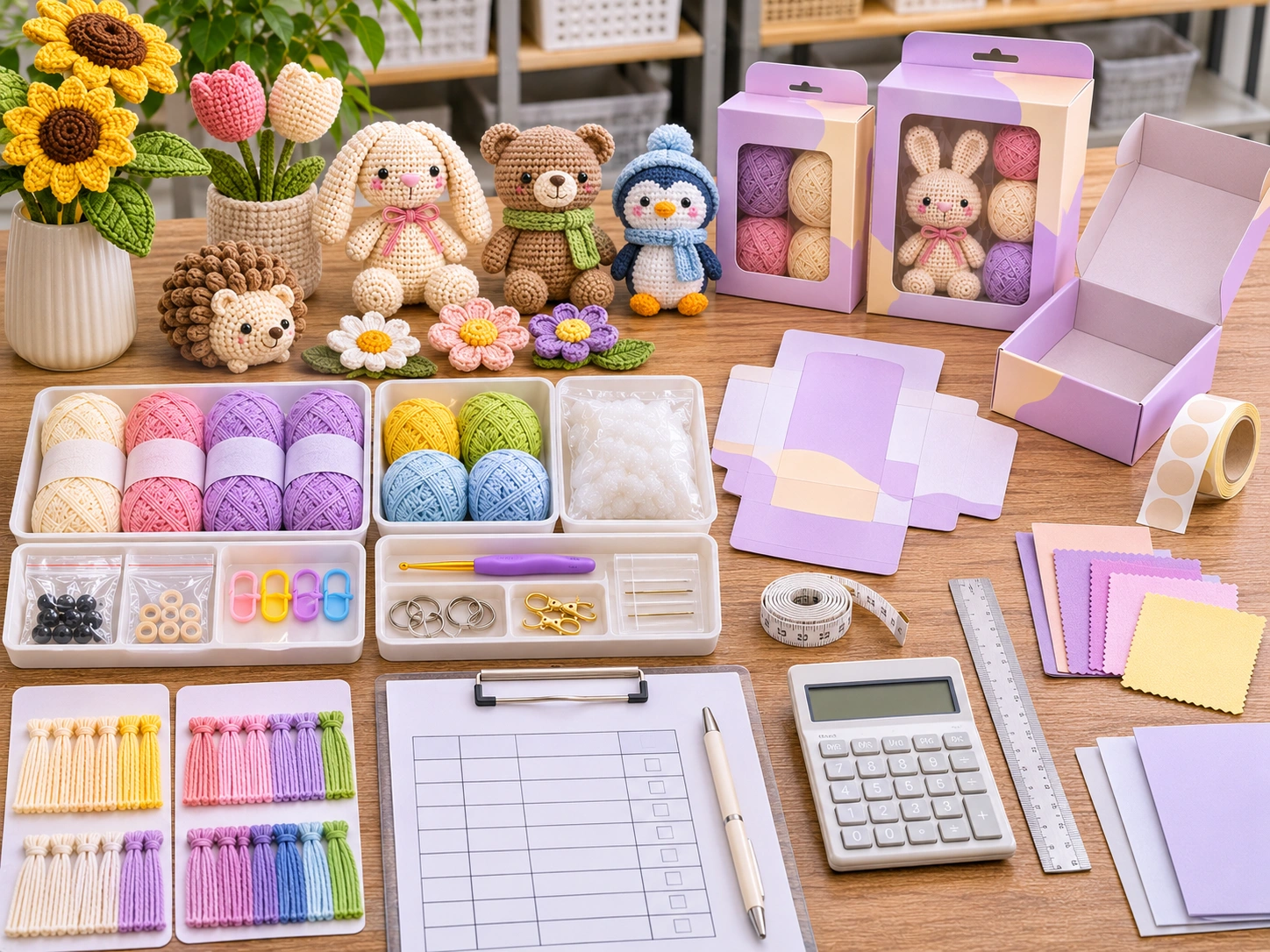
A multi-SKU program may reuse yarn shades, crochet hooks, stuffing, accessory bags and packaging materials. The template helps identify what is needed before the kit packing operation begins.
- Per-SKU BOM and quantity-per-kit inputs
- Material loss allowances by component
- Required units calculated from the SKU demand plan
- Available stock and incoming supply tracking
- Shortage alerts for procurement follow-up
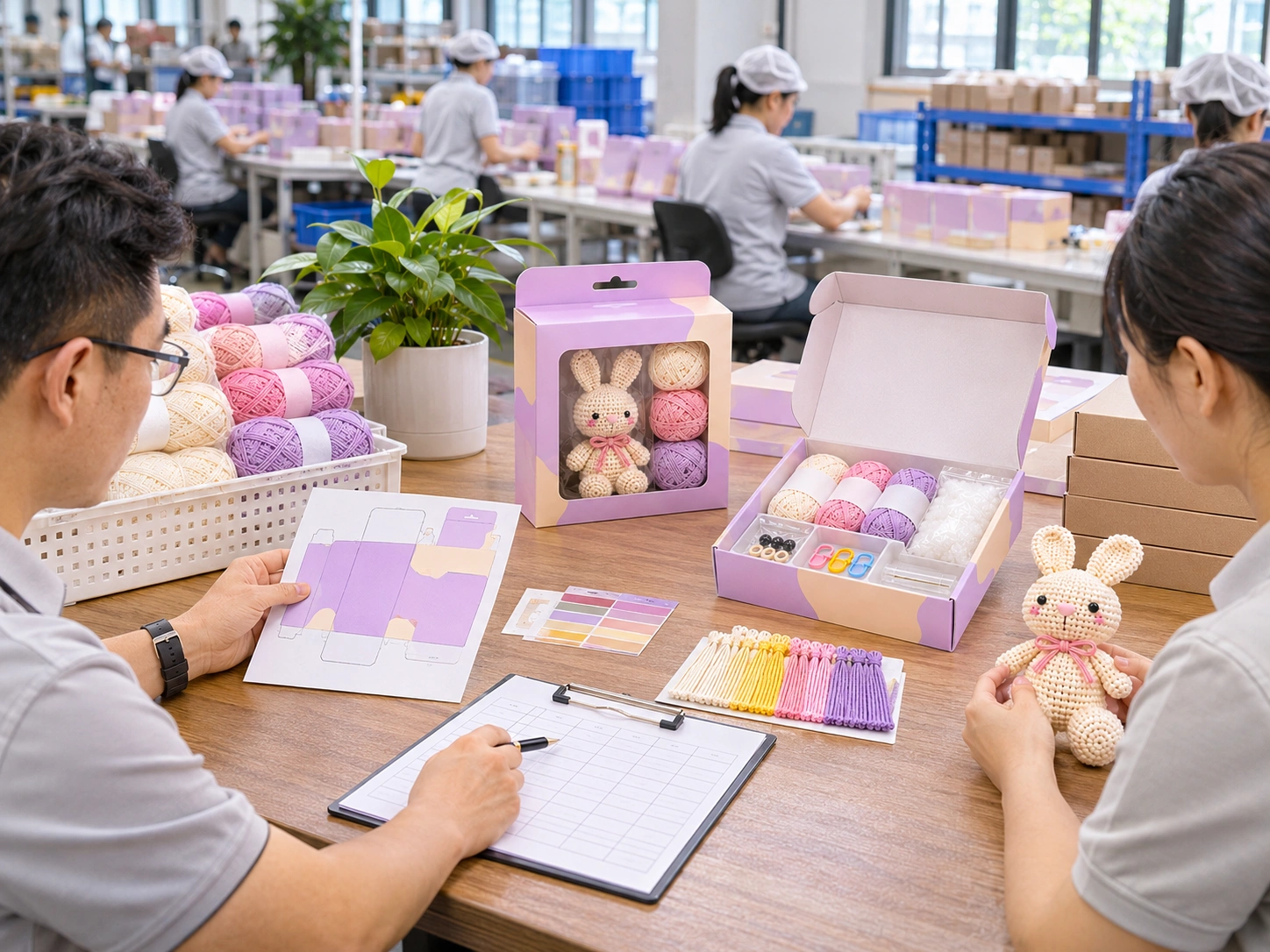
From Estimated Demand to Indicative Schedules
Production planning is more useful when each SKU has a clear volume, an assumed daily output, a planned start date and a target dispatch date. Use the workbook to make those inputs visible.
- Working-day duration estimated from planned quantity and daily output
- Estimated finish dates using weekday-based calculations
- Shipment buffer and target-date checks
- Material readiness and schedule notes
- Shipment batch and packing progress tracking
Important: The schedule uses buyer-entered assumptions, not confirmed U-My production slots. Local holidays, testing, sampling and freight transit need separate consideration.
How to Use the Planning Template
A simple four-step preparation process for brands, importers and distributors managing coordinated retail crochet kit collections.
Replace Demo SKUs
Remove the clearly marked sample rows and enter actual SKU details and target quantities.
Complete Material Data
Add BOM components, per-kit consumption and incoming or available stock.
Set Capacity Assumptions
Enter realistic daily output and dates for indicative production planning.
Request Confirmation
Share the completed workbook for manufacturer feasibility and quotation review.

Download the Capacity Planning Template
Organize a multi-SKU purchase program in a structured English Excel workbook. Replace the illustrative DEMO rows, enter your own assumptions and review the calculated planning outputs.
- SKU demand and MOQ baseline checks
- Material BOM calculations and shortage alerts
- Production lot, capacity and working-day estimates
- Shipment planning and quantity tracking
- Dashboard with planning summary
This is a procurement planning aid, not a final quotation, confirmed production capacity reservation or guaranteed delivery schedule. Upload the XLSX to the stated /downloads/ location before publishing this page.
Frequently Asked Questions
Answers for procurement and supply-chain teams preparing their first or recurring multi-SKU crochet kit orders.
Does the workbook show U-My's actual available capacity?
No. Daily output, start dates and schedules are planning assumptions. Real capacity allocation, material lead times and dispatch dates must be checked with our team.
Can I combine several SKUs to meet the 1,000-unit MOQ?
The standard planning baseline is 1,000 units per SKU. Combining smaller SKUs does not automatically satisfy minimum order requirements. Special programs must be reviewed and approved separately.
Can the template calculate component requirements automatically?
Yes. Add the SKU and quantity per kit in the Material Plan worksheet. The workbook reads the corresponding planned SKU demand, calculates estimated gross requirements including loss allowance and compares them with available and incoming stock.
Does the estimated finish date include all holidays and shipping time?
No. The basic production date formula considers weekdays only. Public holidays, sample and artwork approval, third-party testing, customs and freight transit need to be planned separately.
Can I use this template for seasonal replenishment?
Yes. It can structure repeat orders, seasonal purchasing, multiple SKUs and dispatch batches. Replace example inputs with current forecasts and confirm production feasibility for each order.
What should I send with my RFQ?
Share your completed workbook, product references, requested quantities by SKU, packaging requirements, destination market and target delivery dates. Do not share confidential third-party files without authorization.
Ready to Plan Your Next Multi-SKU Crochet Kit Program?
Share your estimated SKU quantities, product specifications, packaging requirements and target delivery dates. U-My can review your project for manufacturing feasibility, MOQ, sampling and lead time.
OEM/ODM Manufacturing • Component Planning • Multi-SKU Coordination • Retail-Ready Packaging